
Osteoarthritis Pain: 3 Things Most People Get Wrong (And What to Do Instead)
May 04, 2026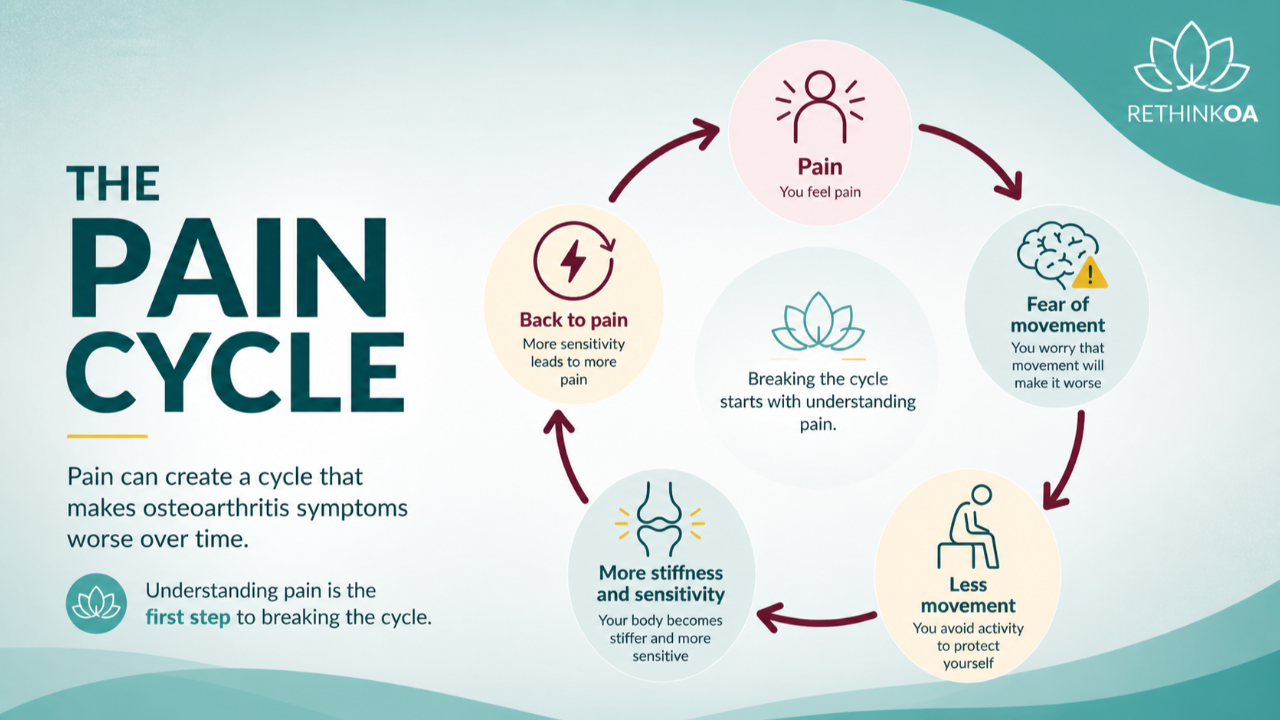
If you have osteoarthritis, you’ve likely been told:
- Your joints are wearing down
- Pain means damage
- You should be careful with movement
It sounds logical. And in some ways, it is.
But it’s also incomplete—and for many people, it leads to avoiding activity, losing confidence, and feeling more limited over time.
This Osteoarthritis Awareness Month, here’s what most people don’t realize about osteoarthritis pain—and how rethinking it can help you stay active.
1. Osteoarthritis pain does not equal joint damage
One of the biggest misconceptions is that more pain = more damage.
But research shows that’s not always true.
People with clear signs of osteoarthritis on X-rays or MRIs may have little to no pain. Others with mild joint changes can experience significant pain.
So what explains the difference?
Pain is not a direct measure of damage. It’s a protective response.
Your body is constantly assessing whether something feels threatening. Pain is one way it signals that.
Pain is your body’s alarm system—not a damage meter.
This is why osteoarthritis pain can feel inconsistent or confusing—and why it doesn’t always match what shows up on imaging.
2. Osteoarthritis pain is influenced by the brain and body—not just the joint
Osteoarthritis is often framed as a “wear and tear” condition.
But pain is more complex than that.
It’s influenced by:
- What’s happening in your joints
- Your past experiences with pain or injury
- Your beliefs about movement
- Fear, stress, and daily context
Modern pain science shows that the brain evaluates all of these inputs and decides whether something is a threat. If it detects a threat, it can produce pain—even when the joint itself is not being damaged.
This helps explain why osteoarthritis pain can:
- Fluctuate from day to day
- Feel worse in certain situations
- Appear without a clear physical cause
Understanding this is not about dismissing pain—it’s about understanding how it works so you can respond differently.
3. Avoiding movement can make osteoarthritis pain worse
If pain feels like damage, avoiding movement makes sense.
But over time, it can backfire.
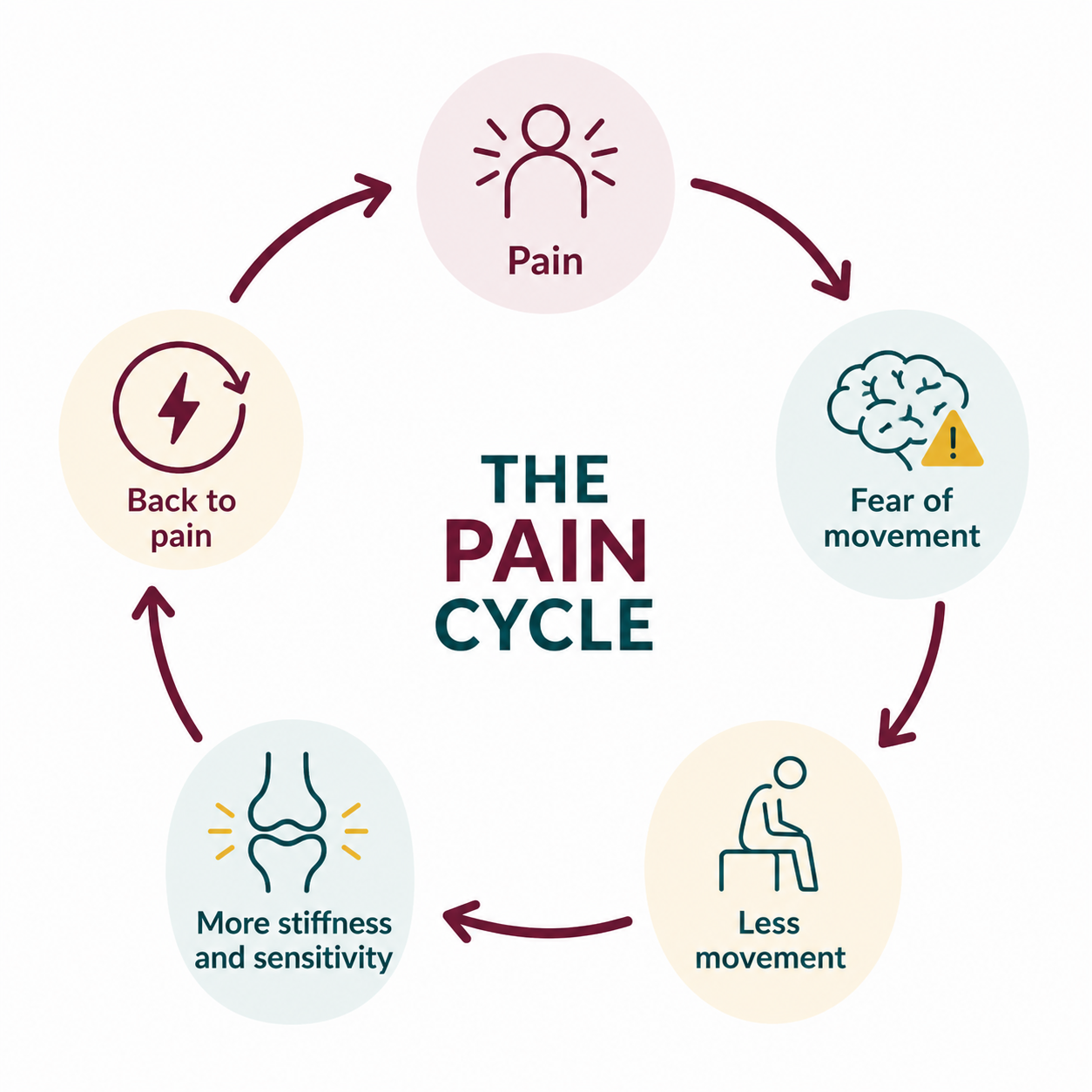
A common cycle looks like this:
- Pain → less movement
- Less movement → more stiffness and sensitivity
- More sensitivity → more pain
At the same time, the body can become more reactive. When the system perceives ongoing threat, it can amplify pain signals, even with normal movement.
That’s why the goal isn’t to push through pain aggressively.
It’s to gradually rebuild confidence in movement.
Movement supports:
- Joint health
- Strength and mobility
- And how your body interprets safety vs. threat
A better way to manage osteoarthritis pain
What if the goal isn’t to wait until pain is gone to move?
What if it’s:
Learning how to move in a way that helps your body feel safe again
This shift—from avoiding pain to understanding it—can change how you experience osteoarthritis.
It can help you:
- Move more consistently
- Feel more confident in your body
- Stay engaged in daily life
Osteoarthritis Awareness Month: Rethinking pain
There’s no shortage of advice for osteoarthritis.
But one of the biggest gaps is this:
Most people are never taught how pain actually works.
And without that understanding, it’s easy to feel stuck.
At Rethink Health, we focus on helping people understand osteoarthritis pain and build confidence in movement—using a short, science-backed digital program.
For Osteoarthritis Awareness Month, the program is available for $19.
If you’re looking for a different approach to managing osteoarthritis pain, you can learn more here:
https://www.rethinkoa.net/program
Final thought
You don’t have to ignore pain.
But you also don’t have to assume it means damage—or let it define what you can and can’t do.
FAQ
Is walking good for osteoarthritis?
For many people, walking can be a helpful low-impact activity that supports joint health, strength, and overall function. The right amount varies from person to person, and starting gradually is often helpful.
Does exercise wear out arthritic joints?
Research does not support the idea that appropriate physical activity “wears out” joints. In fact, exercise is consistently recommended in osteoarthritis treatment guidelines because it can improve strength, function, and quality of life.
Why does my osteoarthritis pain change from day to day?
Osteoarthritis symptoms can be influenced by many factors, including activity levels, sleep, stress, inflammation, sensitivity, and overall health. More pain does not always mean more damage is occurring.
Can osteoarthritis get better?
While osteoarthritis itself does not fully reverse, many people can improve pain, physical function, strength, confidence, and overall quality of life with the right support and management strategies.
Should I avoid movement during an osteoarthritis flare-up?
Sometimes movement needs to be modified during a flare-up, but complete rest is not always the answer. Gentle movement and gradual return to activity are often recommended depending on symptoms and guidance from a healthcare professional.
What kinds of exercise are best for osteoarthritis?
Walking, strengthening exercises, cycling, swimming, stretching, and other low-impact activities are commonly recommended. The best type of movement is often the one that feels manageable and sustainable for you.
Can mindset really affect osteoarthritis symptoms?
Pain is real and osteoarthritis is a physical condition. At the same time, research suggests that beliefs, expectations, fear, stress, and confidence can influence how people experience pain and engage with movement and daily activities.
About the Author
Melissa Boswell, PhD, is a bioengineer and digital health founder with nearly a decade of experience working in osteoarthritis, movement science, and human performance. She is the founder of Rethink OA, a clinically validated digital program developed from research conducted with collaborators at Stanford University and published in npj Digital Medicine. Her work focuses on helping people better understand pain, movement, and behavior change in osteoarthritis.

Move More. Fear Pain Less.
Learn how to reduce pain, stay active, and support your joints—starting today.