
Does Exercise Make Osteoarthritis Worse?
May 25, 2026
Many people with osteoarthritis stop exercising because they are afraid that movement is damaging their joints.
They may avoid walking, strength training, hiking, sports, or even everyday activities because they have been told things like:
- “Your knee is bone-on-bone.”
- “You’re wearing out your joints.”
- “You should avoid too much activity.”
- “Don’t make it worse.”
If movement hurts, it is natural to assume movement is harmful.
But research over the last several decades tells a more nuanced story.
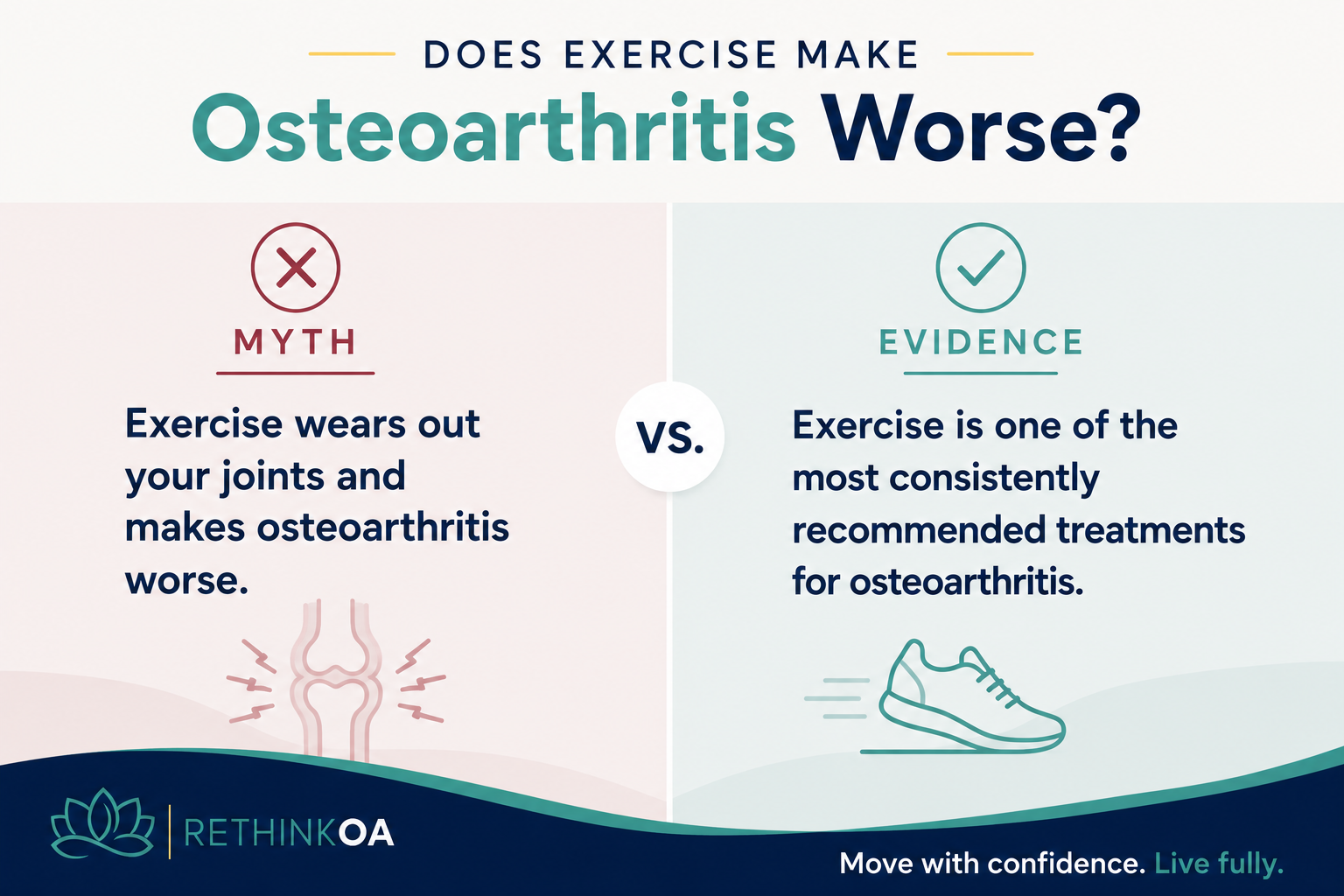
In fact, exercise is considered one of the core treatments for osteoarthritis by major medical organizations worldwide, including OARSI, the American College of Rheumatology, and the CDC Arthritis Program.
That does not mean every exercise is appropriate for every person at every moment. And it does not mean pain should always be ignored.
But it does mean that movement is generally not something people with osteoarthritis need to fear.
Why many people believe exercise is damaging their joints
Osteoarthritis is often described as “wear and tear,” which can make it sound like movement slowly grinds the joint down over time.
For many people, this creates a frightening mental image:
“Every step is causing more damage.”
Pain can reinforce this belief. If symptoms increase after activity, it can feel like proof that exercise is harmful.
Imaging findings can also contribute to this fear. Hearing phrases like:
- “bone-on-bone”
- “degeneration”
- “cartilage loss”
- “severe arthritis”
can understandably make people want to protect the joint by moving less.
But pain and osteoarthritis are more complicated than a simple “damage equals pain” model.
Research has consistently shown that imaging findings do not perfectly predict pain, function, or quality of life. Some people with significant joint changes have relatively little pain, while others with milder imaging findings experience substantial symptoms.
This is one reason why movement decisions should not be based on imaging alone.
What the research actually says about exercise and osteoarthritis
Exercise is one of the most well-studied treatments for osteoarthritis.
Large systematic reviews and clinical guidelines consistently show that exercise can improve:
- pain
- physical function
- mobility
- strength
- quality of life
A major review published in the Cochrane Database of Systematic Reviews found that land-based exercise programs improve pain and function in people with knee osteoarthritis.
Similarly, the OARSI clinical guidelines identify exercise, education, and physical activity as core treatments for osteoarthritis.
Importantly, exercise recommendations are not limited to elite athletes or intense fitness programs. Research supports many different forms of movement, including:
- walking
- strength training
- cycling
- swimming
- tai chi
- yoga
- low-impact aerobic activity
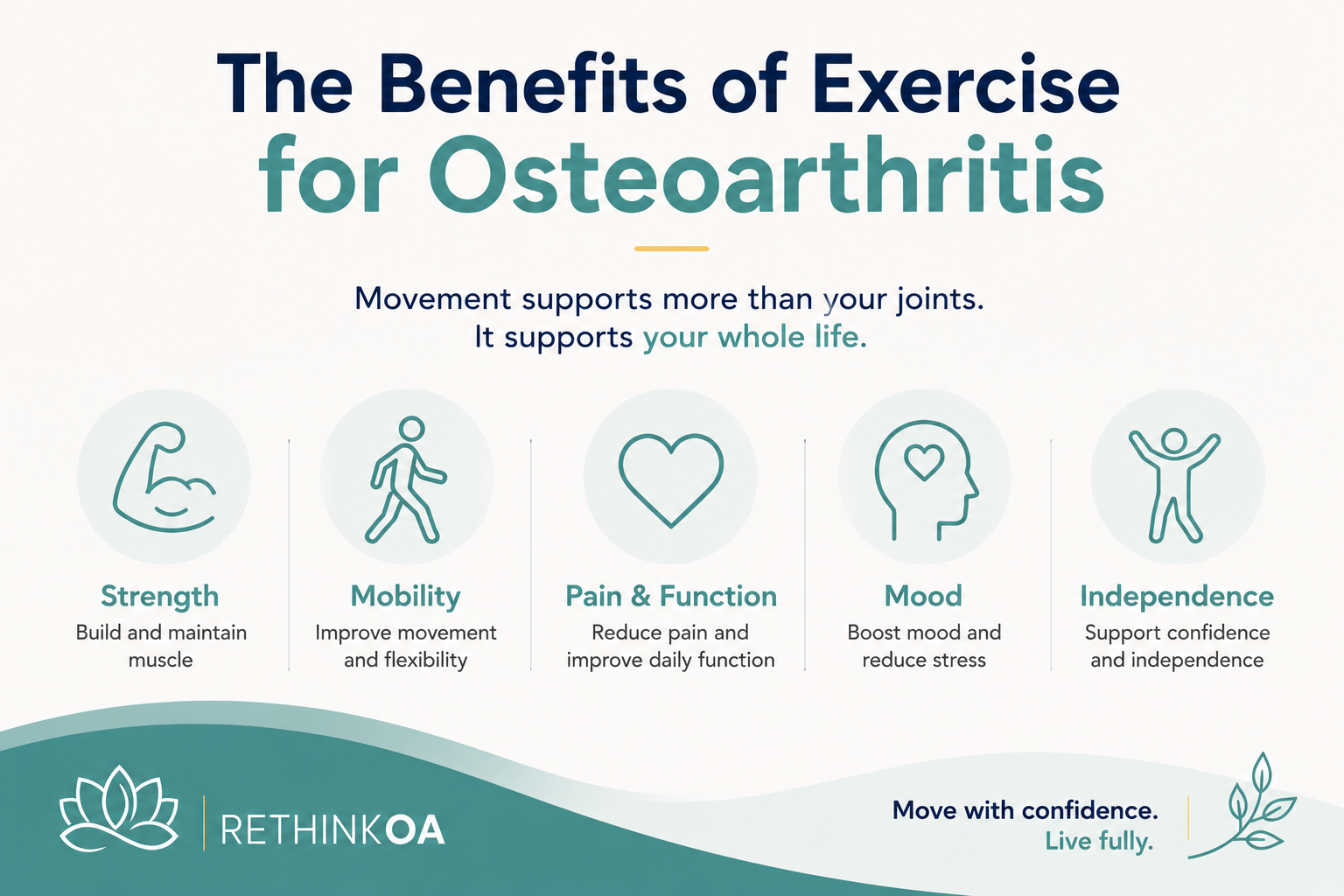
Exercise can also support overall health beyond the joint itself, including cardiovascular fitness, balance, mood, sleep, confidence, and independence.
Does pain during exercise mean damage?
Not necessarily.
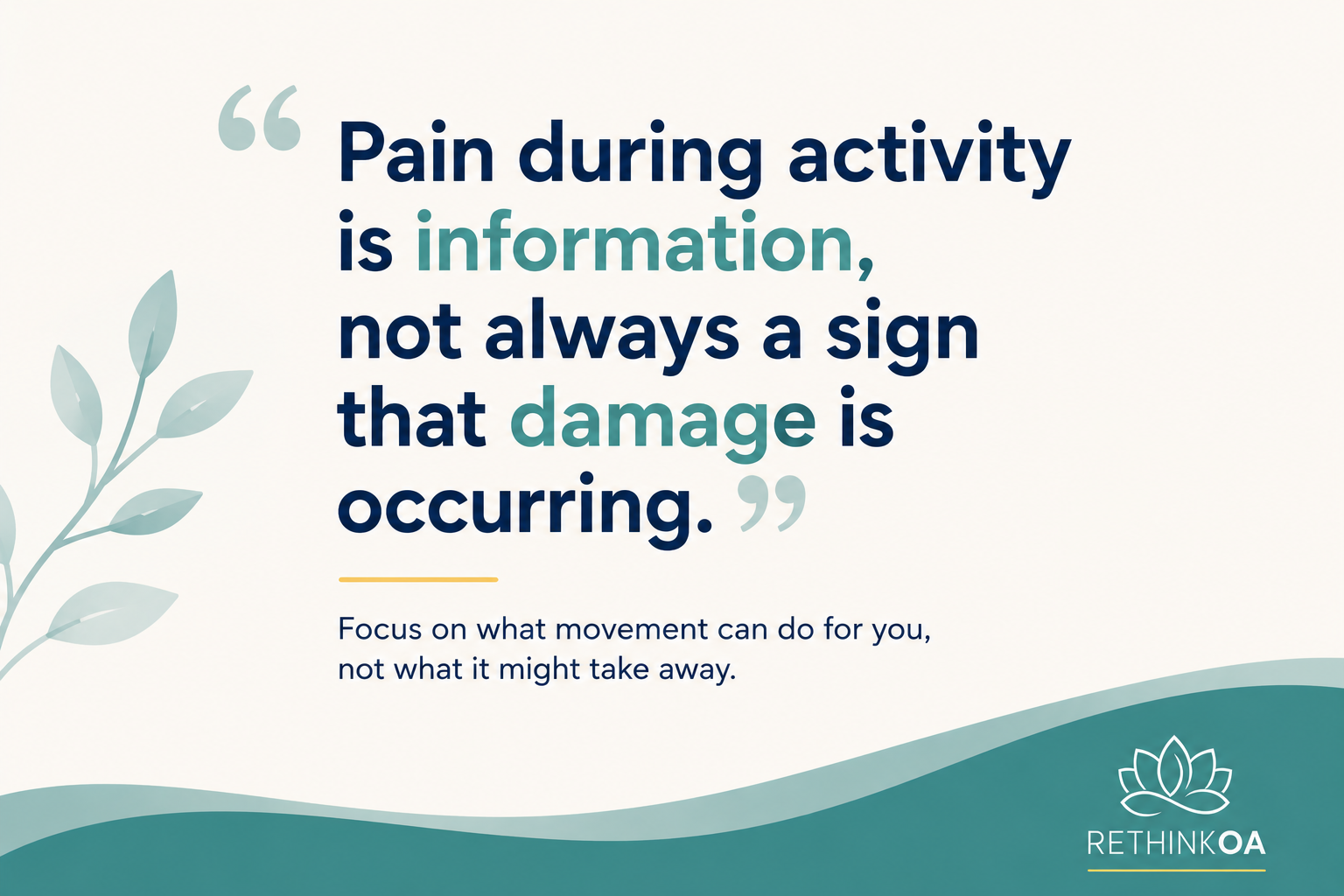
Pain during activity is information, but it is not always a sign that damage is occurring.
Modern pain science researchers such asLorimer Moseley and David Butler have emphasized that pain is influenced by many factors beyond tissue structure alone, including sensitivity, protection, stress, expectations, previous experiences, and perceived threat.
Their book Explain Pain and related publications helped introduce many of these concepts into rehabilitation and patient education.
This does not mean osteoarthritis pain is imaginary. Osteoarthritis is a real physical condition.
But it does mean that pain during movement does not automatically mean a person is “damaging” their joint further.
For example:
- Stiffness may improve after movement
- Discomfort may decrease as the body warms up
- Returning to activity after inactivity may temporarily increase soreness
- Fear and tension can sometimes amplify symptoms
At the same time, not all pain should be ignored.
Sharp increases in swelling, major symptom flare-ups, instability, or pain that does not recover appropriately may signal that an activity needs to be modified, reduced, or approached differently.
The goal is usually not “push through everything” or “avoid movement completely.”
Instead, the goal is often to find the right type and amount of movement for the individual.
What about “bone-on-bone” osteoarthritis?
Many people are told they have “bone-on-bone” osteoarthritis and assume exercise is unsafe afterward.
But even in people with more advanced osteoarthritis, movement can still be beneficial.
Research has shown that the relationship between imaging severity and symptoms is often inconsistent. Pain, stiffness, function, confidence, sleep, stress, inflammation, muscle strength, and physical activity levels all influence the experience of osteoarthritis.
This is one reason many clinicians now focus not only on joint structure, but also on helping people stay active, capable, and engaged in life.
Having osteoarthritis does not automatically mean a person should stop moving.
What types of exercise help osteoarthritis?
There is no single “perfect” exercise for osteoarthritis.
The best movement is often the one a person can do consistently and safely enough to maintain over time.
For some people, that may be:
- walking
- strength training
- cycling
- swimming
- yoga
- gardening
- dancing
- recreational sports
- short movement breaks throughout the day
For others, exercise may need to start smaller.
One important misconception is that exercise only “counts” if it is intense.
In reality, physical activity does not need to look like hard workouts to be meaningful or beneficial.
Short walks matter.
Gentle strengthening matters.
Daily movement matters.
Consistency is often more important than intensity.
Sometimes the answer is adjusting the dose, not stopping movement
One of the most important concepts in osteoarthritis management is that movement is not all-or-nothing.
Sometimes symptoms increase because:
- Activity changed too quickly
- Recovery was insufficient
- Pacing was difficult
- The body was already irritated or sensitive
In these situations, the answer is not always to stop moving completely.
Sometimes the better approach is:
- Modifying the activity
- Reducing intensity temporarily
- Adjusting frequency
- Building more gradually
- Improving recovery strategies
This is one reason individualized approaches matter.
Two people with similar imaging findings may respond very differently to the same exercise program.
Movement is about more than the joint
Exercise affects far more than cartilage.
Physical activity supports:
- muscle strength
- cardiovascular health
- balance
- mobility
- mental health
- confidence
- independence
- quality of life
It also plays an important role in healthy aging overall.
The World Health Organization and CDC both identify physical activity as one of the most important behaviors for long-term health and well-being.
For many people with osteoarthritis, the goal is not simply to protect a joint. It is maintaining the ability to participate in life.
The goal is not perfect joints
Most people with osteoarthritis will still have symptoms, difficult days, and fluctuations in pain.
The goal is not to eliminate every sensation or avoid movement forever in an attempt to “protect” the joint.
The goal is to help people stay active, capable, and engaged in life for as long as possible.
That often starts with understanding that movement is not automatically harmful — and that exercise can be adapted, scaled, and approached in ways that support both physical and mental wellbeing over time.
FAQ
Does exercise wear out arthritic joints?
Current research does not support the idea that appropriately dosed exercise universally “wears out” joints in people with osteoarthritis. Exercise is widely recommended as a core treatment for osteoarthritis.
Is walking good for osteoarthritis?
Walking is one of the most commonly recommended forms of physical activity for osteoarthritis because it can support mobility, strength, cardiovascular health, and function.
Should I exercise if my knee hurts?
It depends on the type and severity of pain. Mild discomfort during activity does not always mean harm, but severe or persistent worsening symptoms may mean the activity needs to be modified.
What exercises are safest for osteoarthritis?
Many forms of exercise can be appropriate, including walking, strength training, cycling, swimming, tai chi, and yoga. The best option often depends on the individual’s symptoms, goals, and preferences.
Is running bad for osteoarthritis?
Research does not clearly show that recreational running causes osteoarthritis in healthy joints. Some people with osteoarthritis may tolerate running well, while others may need modifications based on symptoms and history.
Should I stop exercising during flare-ups?
Not always. Some people benefit from temporarily reducing intensity or modifying activities rather than stopping movement completely.
About the Author
Melissa Boswell, PhD, is a bioengineer and digital health founder with nearly a decade of experience working in osteoarthritis, movement science, and human performance. She is the founder of Rethink OA, a clinically validated digital program developed from research conducted with collaborators at Stanford University and published in npj Digital Medicine. Her work focuses on helping people better understand pain, movement, and behavior change in osteoarthritis.

Move More. Fear Pain Less.
Learn how to reduce pain, stay active, and support your joints—starting today.