
For Clinicians & Care Organizations
The behavioral layer of conservative osteoarthritis care is missing
Guidelines put exercise and self-management first-line — but patients who believe pain means damage don't engage with either. Rethink OA is a digital mindset program, tested in an education-controlled randomized trial, that changes what patients believe so they change what they do. Under 2 hours. Zero clinician time.
Start a ConversationYou already tell patients to move. Here's why they don't.
Most patients with knee osteoarthritis arrive believing their joint is wearing out and that activity accelerates the damage. That belief drives fear of movement, activity avoidance, poor PT adherence, and the conviction that surgery is inevitable. A 15-minute visit can't undo it — and handouts don't either: in our trial, an attention-matched education program moved knowledge, but it was significantly less effective than Rethink OA at reducing fear of movement, building self-efficacy, and shifting surgical expectations.
Rethink OA is the structured behavioral layer that does that work between your visits — so the time you do have goes further.
Patients are asking for Rethink OA
When we asked our clinical trial participants what helped most, the same theme came back unprompted: this is what they want to hear at diagnosis and return to afterward.*
I wish I had known this information when I was first diagnosed some 16+ years ago.
“I need help but am not sure where to turn for assistance.”
“When I got my diagnosis, I didn’t get any info about OA so I’m really glad I got to see these videos.”
“That being diagnosed with osteoarthritis is not a sentence to inactivity and pain for life.”
“I wish there was a way to incorporate the mindset you have cultivated in this program with more healthcare professionals.”
We know the constraint isn’t caring — it’s time, and the time you have needs to go to examining, treating, and progressing care. Rethink OA is a rigorously tested resource you can hand over with confidence, doing the education and mindset work between visits.
*Verbatim open-ended responses from deidentified participants in the Rethink OA randomized controlled trial (NCT05698368).
Four modules. Under two hours. Zero clinician time.
A self-guided digital program — short films featuring Stanford experts and real patients, plus structured reflection — that patients complete on any device. It slots into existing pathways without workflow changes:
- At diagnosis (primary care): give patients an evidence-based next step beyond 'stay active,' in the moment the diagnosis lands.
- Alongside PT: reduce kinesiophobia before and between visits so home programs actually get done.
- In orthopedic pathways: standardized expectation-setting for not-yet-surgical patients, and preparation for those proceeding.
- In value-based contracts: a low-cost, population-scale intervention for the OA cohort driving MSK spend.
Rethink OA complements medical care, PT, and surgical pathways — it never replaces them.
Discuss how Rethink OA fits into your care pathwayClinical Evidence
A randomized controlled trial with an education control — not a pre-post case series
Rethink OA was tested against both an attention-matched education program and a no-intervention control in 408 adults with symptomatic knee osteoarthritis, with outcomes at one-month follow-up. Responder rates below use published minimal clinically important differences (MCIDs) where available.
Fear of movement
% achieving meaningful improvement (BFMSO)1
Physical activity
% gaining ≥26 PASE points2
Perceived need for surgery
% improving ≥1 category (5-pt scale)3
Fear of movement, pain self-efficacy, osteoarthritis knowledge, and perceived need for surgery each improved significantly vs. both the education and no-intervention groups (P < 0.001). Physical activity improved significantly vs. no intervention (P = 0.001).
1Meaningful improvement = ≥0.33 avg-point reduction on BFMSO (≈12% of scale range; no published MCID — threshold documented in our methods workbook). Rethink OA 59% vs. education 50% vs. no intervention 21%. 2≥26 points on PASE, the trial's pre-specified clinically relevant threshold (no published PASE MCID). 3≥1 full category on a 5-point Likert scale. 4Among patients rating themselves "likely/very likely" to need surgery at baseline (72% of the Rethink OA group). Perceived need for surgery is an attitude measure, not surgical utilization. Effect sizes (d) are within-group standardized changes, baseline to one-month follow-up, in the Rethink OA group; between-group significance is reported separately (P values), and responder bars compare all three arms directly. All outcomes self-reported at one-month follow-up. Boswell MA, et al. npj Digital Medicine 7, 285 (2024). doi:10.1038/s41746-024-01281-8.
What could Rethink OA save your organization?
Savings estimates are modeled from our randomized clinical trial (npj Digital Medicine, 2024) and published health-economics literature. Adjust the inputs to match your population.
Your population
Tell us about the knee OA patients you manage.
Baseline annual spend per patient
Typical non-surgical knee OA spend. Pre-filled from published cost data — edit to match your claims.
Adjust savings assumptions (pre-set to our Base Case)▾
Where the savings come from (per patient / yr)
Built to deploy wherever OA patients are managed
- Value-based care organizations & medical groups: Deploy across your OA population; track engagement and outcomes. Priced to make the pilot decision easy.
- Health plans: A supplemental benefit members actually finish: 86% completion, 4.8/5 would recommend.
- Digital MSK & health platforms: License the validated mindset layer your engagement funnel is missing.
- PT clinics & specialty practices: Refer patients directly today — or talk to us about clinic-level access for your caseload.
Developed at Stanford. Tested like a therapeutic.
Rethink OA was built at Stanford University by a team spanning bioengineering, psychology, orthopedic surgery, and health behavior, with patients involved throughout the design process. It was evaluated in a prospectively registered, three-arm randomized controlled trial (NCT05698368) with an attention-matched education control, and published in npj Digital Medicine, a Nature Portfolio journal. Founder Melissa Boswell, PhD (Assistant Professor of Biomedical Engineering, Wake Forest University School of Medicine) is the first author of the trial.
Outcomes are self-reported at one-month follow-up; between-group pain change did not reach significance (P = 0.054). We publish our thresholds and share our data dictionary with partners — ask us for it.
From the Field
Trusted by professionals who work with individuals with knee pain and osteoarthritis every day
Rethink OA is a well-built program for anyone dealing with osteoarthritis. The videos feature real orthopedic surgeons, researchers, and behavioral health experts, and do a great job reframing pain science and building confidence to stay active instead of avoiding movement. As a personal trainer, this is exactly the kind of resource I want backing up what I tell clients, so I’ll be recommending it to anyone who comes to me with chronic knee or joint pain. Great program from someone clearly putting real expertise behind it.
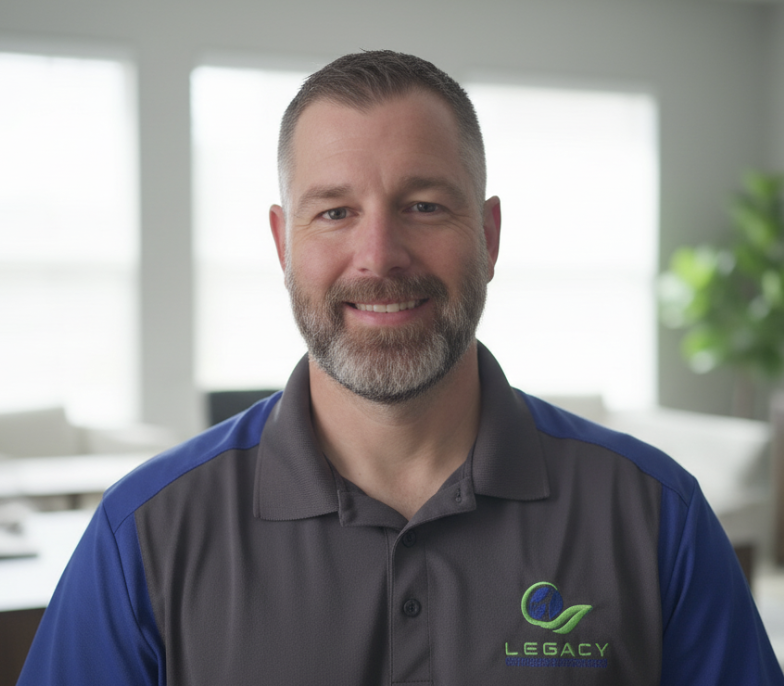
ISSA Certified Personal Trainer · Nutrition Coach · Strength & Conditioning Specialist
Partner With Rethink OA
A referral program built to complement your care — not add to your workload
Rethink OA gives your clients with knee osteoarthritis about two hours of research-backed education — developed at Stanford University and tested in a randomized clinical trial — that helps them understand their pain, fear movement less, and stay engaged with physical therapy and healthy habits between visits.
Clinicians also tell us the program doubles as education material for their own teams — a shared language for talking with patients about pain, movement, and osteoarthritis.
Two ways to partner
Referral partnership
Free for your clinic. You receive a referral code unique to your practice — it gives your clients 20% off the program, and lets us share back how your referrals are progressing.
We'll also send you a printable flyer customized with your code and a QR code that takes clients straight to the program.
Clinic license
License Rethink OA for your practice and give all of your patients access — a built-in resource of your clinic that supports what you're already telling patients between visits.
Program content can also be embedded into your own patient-education platform — ask us about organizational options.
Ready to partner, or want to learn more?
Get Your Referral Code or LicenseBring Rethink OA to Your Patients
Tell us about your organization, and we'll follow up within two business days — with the trial data, implementation options, and pilot pricing.
HSA and FSA Eligibility
Individual patients may be eligible for HSA/FSA reimbursement with an LMN
More Information on HSA and FSA