
Why Confidence May Be One of the Most Important Factors in Osteoarthritis
Jul 06, 2026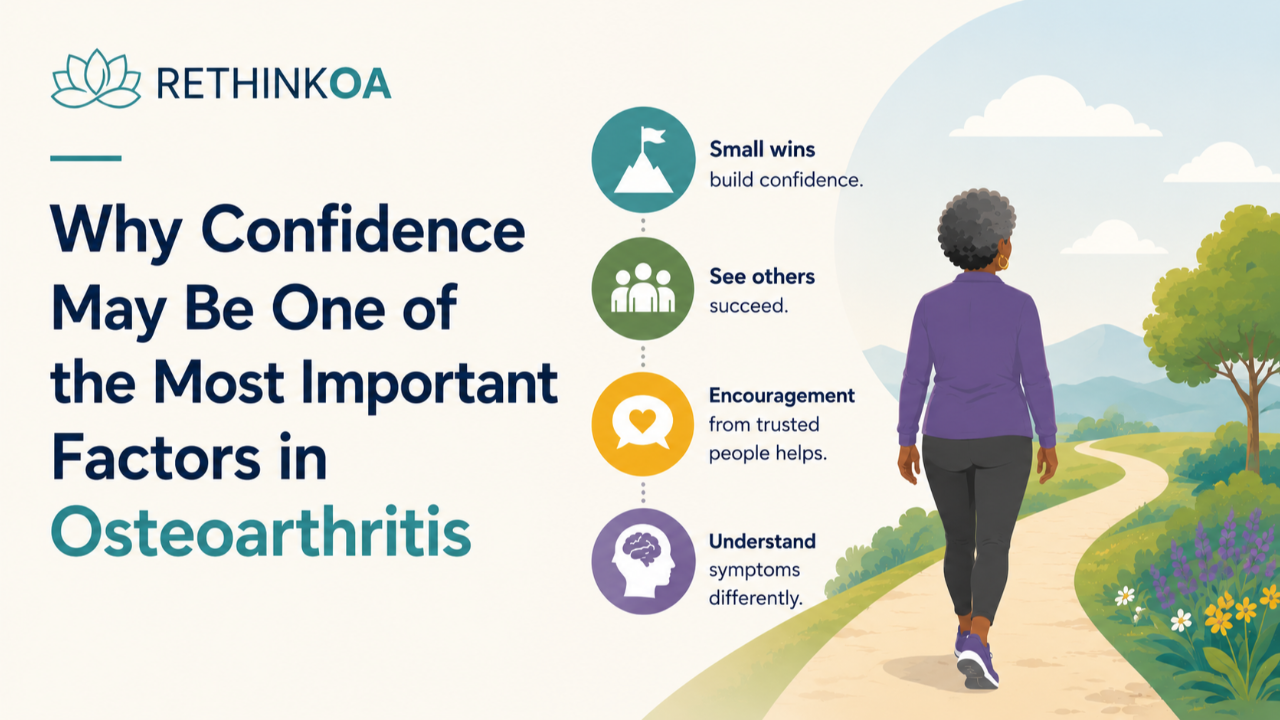
If you have knee osteoarthritis, you’ve probably heard a lot about cartilage, inflammation, exercise, weight loss, injections, medications, and even surgery. But there is another factor that plays an important role in how people experience osteoarthritis—one that often gets far less attention.
It’s confidence.
Not confidence in the sense of having a positive attitude or pretending everything is okay. I’m talking about confidence in your ability to manage symptoms, stay active, and continue doing the things that matter to you despite having osteoarthritis. Researchers call this self-efficacy, and decades of research suggest it may be one of the most important psychological factors influencing how people live with osteoarthritis.
What Is Self-Efficacy?
Self-efficacy is a term developed by psychologist Albert Bandura. It refers to your belief that you can successfully perform a specific behavior or handle a specific challenge. In osteoarthritis, that might mean believing that you can:
- Go for a walk even if your knee feels stiff
- Climb stairs safely
- Stay active during a pain flare
- Follow through with an exercise program
- Manage symptoms without feeling overwhelmed
Self-efficacy is different from optimism. You don’t have to believe your osteoarthritis will magically disappear. You don’t have to ignore pain or convince yourself that everything is perfect. Self-efficacy is simply the belief that you can take effective action. That distinction matters because confidence influences behavior. And behavior plays a major role in long-term osteoarthritis outcomes.
Confidence Is Closely Linked to Pain, Function, and Emotional Well-Being
Researchers have studied self-efficacy in arthritis for decades, and the findings are remarkably consistent. A large meta-analysis published in Rheumatology examined data from more than 9,000 people with osteoarthritis and rheumatoid arthritis. The researchers found that people with higher arthritis self-efficacy tended to report:
- Less functional impairment
- Lower pain severity
- Less emotional distress
The relationships were not small. They were moderate in size across all three outcomes, suggesting that confidence is meaningfully connected to how people experience and manage arthritis.
Of course, confidence isn’t the only factor that affects pain and function. Osteoarthritis is complex. Physical changes in the joint, strength, sleep, stress, overall health, and many other factors all matter. But the research suggests that confidence is more than just a nice bonus. It appears to be an important part of the picture.
Think about it this way: two people may have very similar knee symptoms, but one believes they have the ability to influence how they feel and function. They know there are strategies they can use to manage flares, stay active, and support their joint health. The other feels powerless against their symptoms and unsure whether anything they do will make a difference. Over time, those beliefs can lead to very different choices, behaviors, and experiences.
Confidence Can Influence Whether We Keep Moving
One of the biggest challenges many people with osteoarthritis face is uncertainty. You may wonder:
“Am I making my knee worse?”
“Should I rest more?”
“What if exercise damages my joints?”
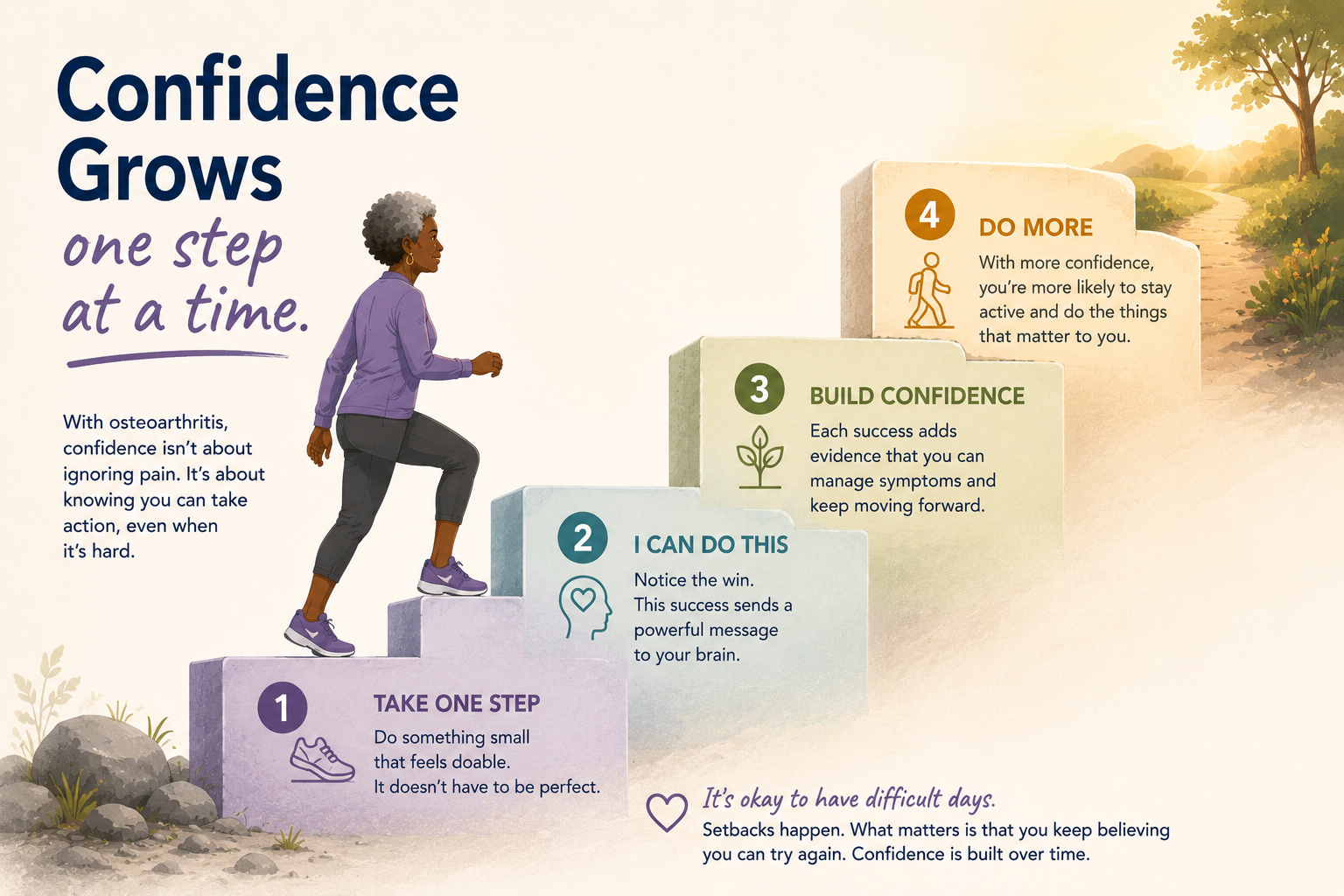
When people lose confidence in their ability to move safely, they often begin avoiding activities that once felt routine. The problem is that avoiding movement can create its own challenges. Over time, reduced activity can contribute to muscle weakness, decreased fitness, greater stiffness, and even less confidence in what the body can do.
Researchers have observed this relationship in people with knee osteoarthritis. In one study, older adults with knee OA participated in either aerobic exercise or resistance training. Both groups improved their confidence in climbing stairs, and increases in self-efficacy helped explain improvements in physical performance.
In other words, exercise wasn’t just changing muscles and joints; it was changing beliefs. Participants were accumulating evidence that they could move, adapt, and succeed. And that confidence matters.
The Good News: Confidence Is Not Fixed
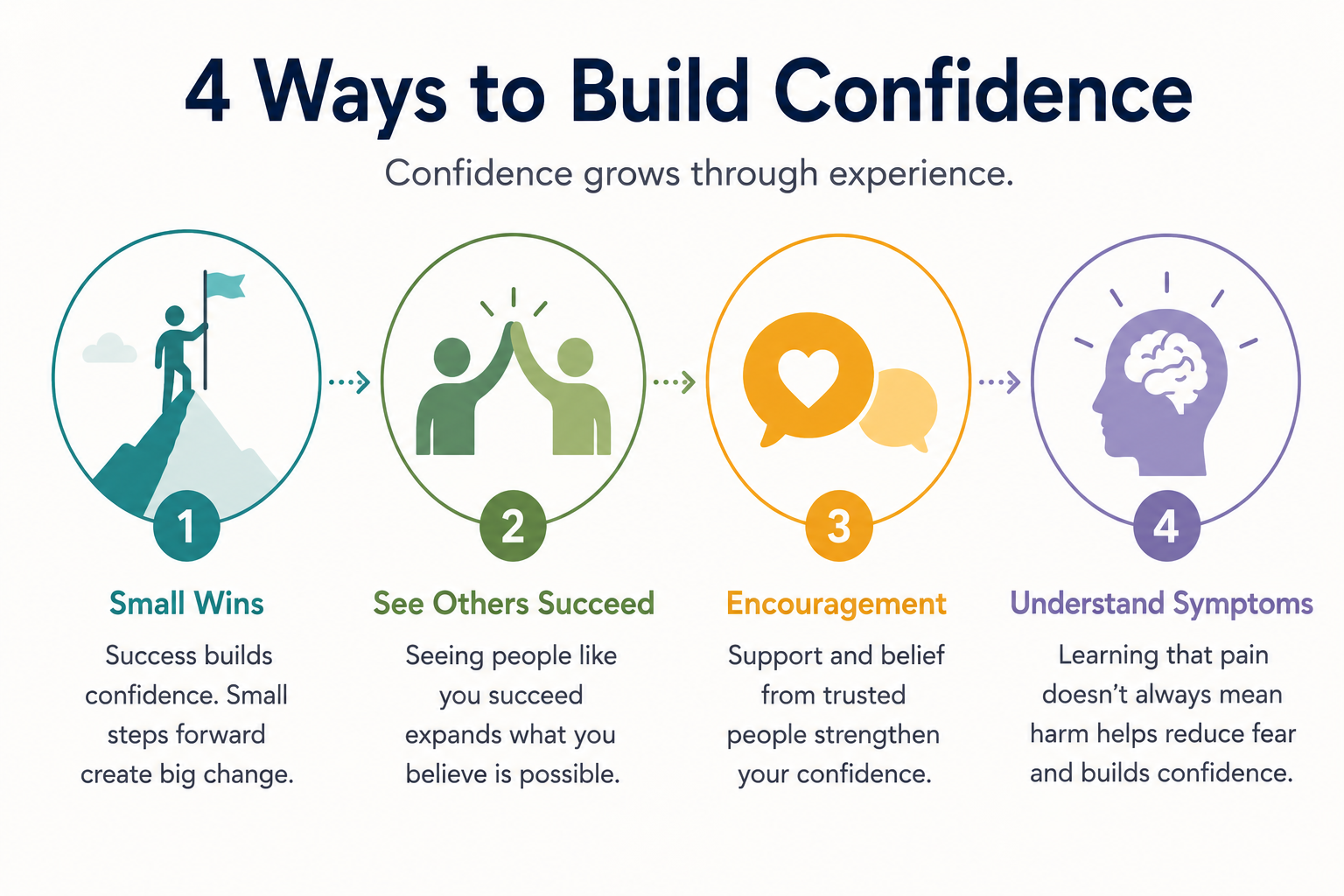
One of the most encouraging things about self-efficacy is that it can be developed. Research suggests several approaches may help strengthen confidence among people with osteoarthritis, including self-management programs, coping skills training, and mind-body exercises such as tai chi. According to Bandura’s work, confidence tends to grow through four main experiences.
1. Small Wins
The strongest source of confidence is success. Not necessarily large transformations, but small successes. Walking for five minutes when you thought you couldn’t. Completing a strengthening session. Getting through a busy day with less fear than before. Each success sends your brain a message: "Maybe I can do this.”
2. Seeing Others Like You Succeed
Confidence often grows when we see people with similar challenges doing things we thought were impossible. This is one reason stories, support groups, and patient examples can be so powerful. They expand our sense of what is possible. This is a big reason why Rethink OA is led by individuals with osteoarthritis in addition to experts in the field.
3. Encouragement From Trusted Sources
Healthcare providers, physical therapists, family members, and friends can all influence confidence. A trusted clinician explaining that movement is safe and beneficial can have a very different impact than a generic internet article.
4. Learning to Interpret Symptoms Differently
This last one is especially important for osteoarthritis. Many people understandably assume that pain always means damage. But modern pain science tells us that pain is more complex than that.
Pain is influenced by many factors, including stress, emotions, expectations, sleep, past experiences, and how threatening the brain perceives a situation to be. Learning that pain does not always equal harm can help people approach movement with less fear and greater confidence.
Why Confidence Matters for Long-Term Osteoarthritis Management
Most evidence-based osteoarthritis treatments require ongoing participation. Exercise works when we keep doing it. Strength improves when we continue training. Healthy habits create benefits over time. That means one of the biggest challenges in osteoarthritis isn’t simply knowing what to do. It’s maintaining the confidence to keep doing it.
Researchers have linked self-efficacy to treatment adherence, pain coping, psychological well-being, and overall functioning in people with osteoarthritis. When confidence is low, even the best recommendations can feel impossible to follow. When confidence grows, people are often more willing to take the next step, try a new activity, recover from setbacks, and stay engaged in their care.
And those small steps can add up.
Final Thoughts
Confidence does not cure osteoarthritis.
It does not regrow cartilage. It does not eliminate pain overnight. And it certainly does not mean ignoring symptoms.
But confidence may influence something equally important: how we respond to osteoarthritis.
The choices we make, the activities we continue, the goals we pursue, and the way we interpret setbacks can all be shaped by what we believe we are capable of doing.
The encouraging news is that confidence is not something you’re born with or without.
Like strength, it can be built.
And for many people living with osteoarthritis, building confidence may be one of the most important steps toward moving more, fearing pain less, and getting back to the activities that make life meaningful.
FAQ
What is self-efficacy in osteoarthritis?
Self-efficacy is your confidence in your ability to manage the challenges that come with osteoarthritis. It is not about believing your arthritis will disappear or pretending pain isn’t real. Instead, it is the belief that there are things you can do to support yourself, stay active, manage symptoms, and continue participating in activities that matter to you. Research suggests that people with higher self-efficacy often report better function, lower pain-related disability, and greater engagement in self-management strategies.
Is confidence the same as positive thinking?
No. Confidence and self-efficacy are different from simply “thinking positively.” Positive thinking often focuses on having an optimistic outlook. Self-efficacy is more practical. It is the belief that you can take meaningful action, even when things are difficult. Someone can acknowledge that osteoarthritis is frustrating and still have high self-efficacy because they believe they have the tools and strategies to manage it.
Can confidence reduce osteoarthritis pain?
Confidence does not directly cure osteoarthritis or eliminate pain. However, research suggests that self-efficacy is associated with lower pain severity, better physical function, and less emotional distress. One reason may be that people with higher confidence are more likely to stay active, engage in treatment, use coping strategies, and continue doing the things that support their health. Over time, these behaviors can influence how pain is experienced and how much it interferes with daily life.
How do I build confidence when movement feels scary?
Confidence is often built through small successes. For example, you might start with a short walk, a few strengthening exercises, or another manageable activity that feels safe. Each successful experience provides evidence that your body is capable and that movement is possible. Many people also build confidence by working with a physical therapist, learning more about pain science, seeing others with osteoarthritis succeed, or gradually returning to activities they have been avoiding.
Why am I afraid to exercise even though I know it’s good for osteoarthritis?
This is extremely common. If movement has been painful in the past—or if you’ve been told your knee is “bone-on-bone” or “wearing out”—it makes sense to feel cautious. Many people worry that exercise will cause additional damage. However, research consistently shows that appropriately dosed physical activity is one of the most effective treatments for knee osteoarthritis. Understanding that pain does not always equal harm can help reduce fear and make it easier to gradually rebuild confidence with movement.
Can exercise improve confidence in people with knee osteoarthritis?
Yes. Research suggests that exercise can improve self-efficacy in people with knee osteoarthritis. In addition to helping improve strength, mobility, and physical function, exercise can provide repeated experiences of success. When people realize they can walk farther, climb stairs more easily, or participate in activities they previously avoided, their confidence often grows alongside their physical improvements.
What should I do if I’ve lost confidence in my knee?
Start small and focus on what you can do rather than what you can’t. Confidence is rarely rebuilt all at once. It often develops through a series of small, manageable wins. Consider working with a healthcare professional, exploring low-impact activities, setting realistic goals, and celebrating progress along the way. Most importantly, remember that losing confidence after experiencing pain is normal. The good news is that confidence is not fixed. Like strength, it can be rebuilt over time.
Why does confidence matter so much in osteoarthritis?
Confidence influences behavior. When people believe they can successfully manage symptoms and stay active, they are more likely to engage in the very behaviors that support long-term health—such as exercising, strengthening, walking, pacing activity, and using self-management strategies. In contrast, when people feel helpless or powerless, they may be more likely to avoid activity, withdraw from meaningful activities, or give up on treatments that could help. This is why many researchers consider self-efficacy to be one of the most important psychological factors in osteoarthritis management.
About the Author
Melissa Boswell, PhD, is a bioengineer and digital health founder with nearly a decade of experience working in osteoarthritis, movement science, and human performance. She is the founder of Rethink OA, a clinically validated digital program developed from research conducted with collaborators at Stanford University and published in npj Digital Medicine. Her work focuses on helping people better understand pain, movement, and behavior change in osteoarthritis.

Move More. Fear Pain Less.
Learn how to reduce pain, stay active, and support your joints—starting today.