
Why So Many People With Osteoarthritis Become Afraid to Move
May 18, 2026
Many people with osteoarthritis have had the experience of pausing before movement and wondering:
“What if I make it worse?”
It might happen before walking downstairs, after sitting for a long time, while walking, or after returning to exercise after a painful flare-up.
Over time, movement can start to feel uncertain, risky, or even dangerous.
That fear is extremely common in osteoarthritis, and it makes sense. Pain naturally changes behavior. When something hurts, most people become more cautious around it.
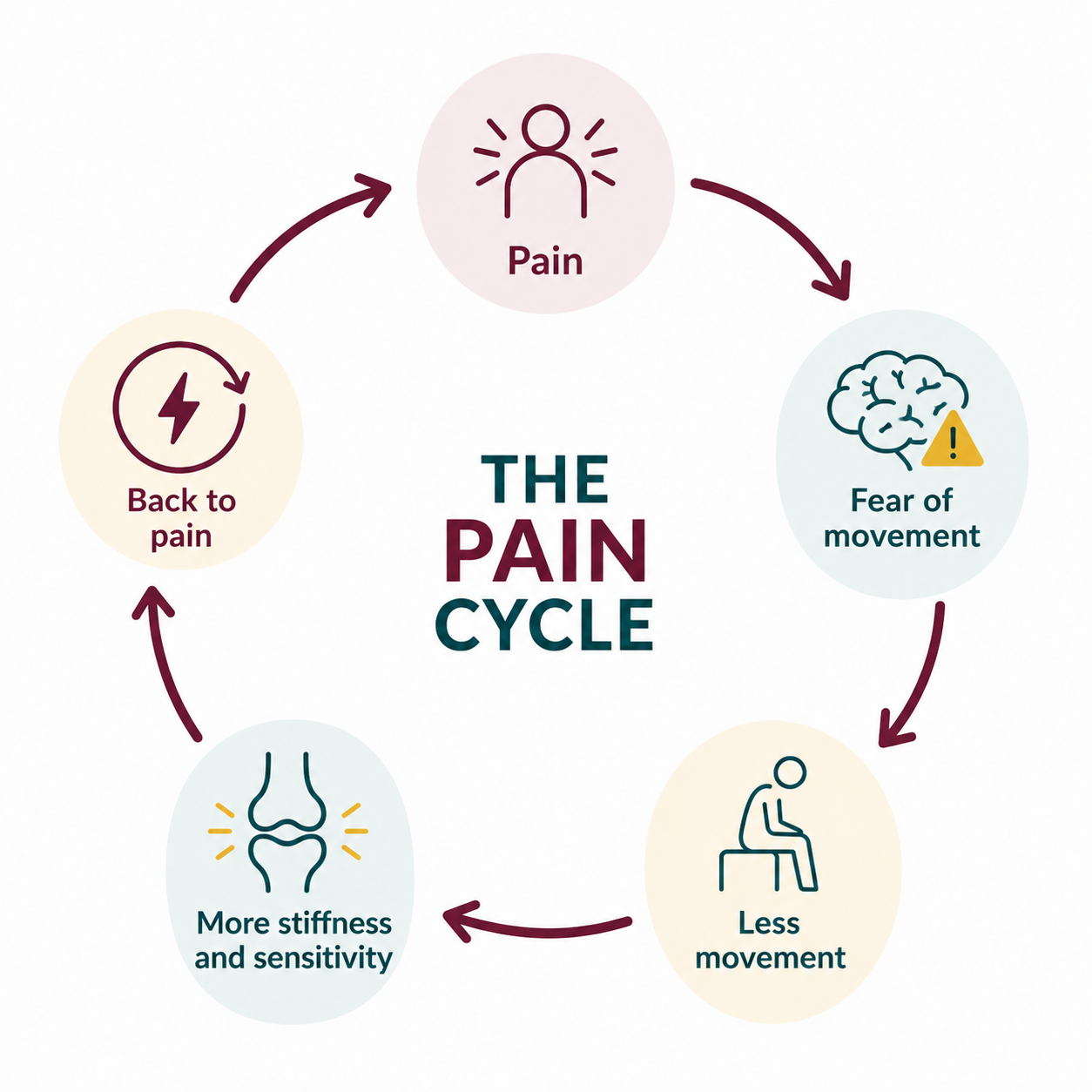
But in osteoarthritis, that caution can sometimes become a cycle of fear, avoidance, reduced confidence, and reduced movement over time.
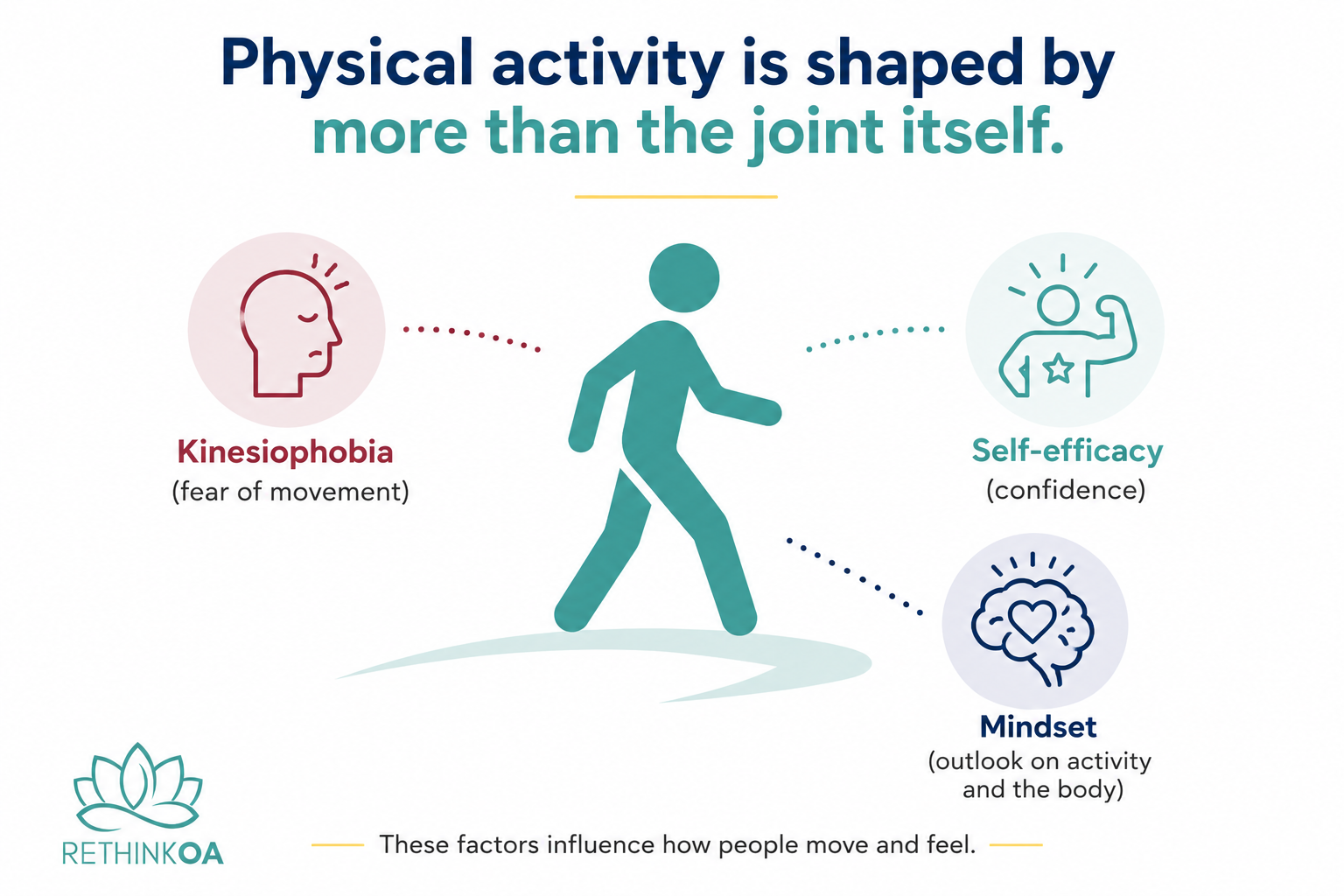
Researchers have studied several psychological and behavioral factors that influence this process, including:
- Kinesiophobia: fear of movement
- Self-efficacy: confidence in your ability to move and manage symptoms
- Mindset: the beliefs and expectations you hold about pain, movement, and your body
These factors do not mean osteoarthritis pain is “all in your head.” Osteoarthritis is a real physical condition, and pain is real. But pain and movement are also shaped by how humans naturally interpret, respond to, and learn from painful experiences.
Understanding these factors can help explain why staying active with osteoarthritis is often more complicated than simply being told to “exercise more.”
Pain naturally changes how people move
Pain is protective.
If you sprain an ankle, you limp. If you touch a hot stove, you pull your hand away. Humans are wired to avoid things associated with pain or injury.
In osteoarthritis, this protective response can make movement feel increasingly threatening over time, especially after repeated pain flare-ups, stiffness, instability, or negative experiences with activity.
Many people become hyperaware of pain signals:
- “Did I overdo it?”
- “Am I damaging my knee?”
- “Should I stop walking?”
- “Is this getting worse?”
Eventually, some people begin avoiding activities they once enjoyed because movement no longer feels safe or predictable.
We discussed this pattern further in our previous article on the osteoarthritis pain cycle, where pain, fear, and reduced movement can reinforce one another over time.
Modern pain science researchers such as Lorimer Moseley and David Butler have emphasized that pain is influenced not only by tissue changes, but also by how the nervous system interprets protection, threat, and meaning. Their book Explain Pain and related publications help bring many of these concepts into patient education and rehabilitation.
Kinesiophobia: when movement starts to feel dangerous
Researchers use the term kinesiophobia to describe fear that movement or physical activity will cause pain, injury, or damage.
In osteoarthritis, this fear can look like:
- avoiding stairs
- hesitating before walks
- stopping exercise completely
- limiting daily activities
- worrying that pain always means harm
- believing movement will “wear out” the joint faster
Fear of movement is common in people with knee osteoarthritis and has been associated with lower physical activity, worse physical function, and reduced quality of life.
Researchers often describe this through the “fear-avoidance model” of pain developed by Johan Vlaeyen and Steven Linton, which explains how pain-related fear can contribute to avoidance behaviors and disability over time.
A systematic review published in the British Journal of Sports Medicine found that kinesiophobia was consistently associated with greater pain, disability, and poorer quality of life across chronic musculoskeletal pain conditions. Similar relationships have been observed in osteoarthritis populations.
Studies in knee osteoarthritis have also linked fear of movement with lower physical activity and poorer quality of life.
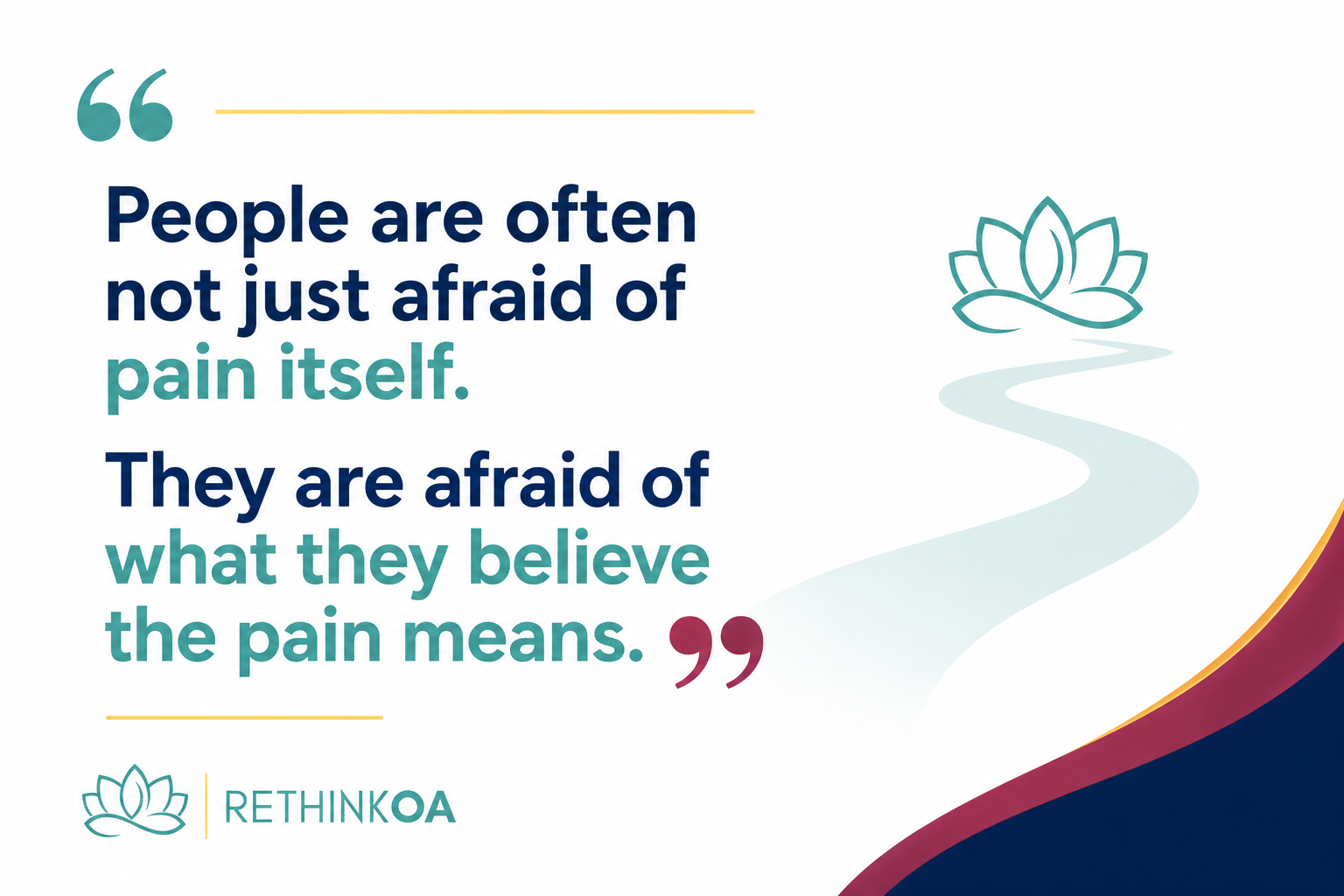
Importantly, people are often not just afraid of pain itself. They are afraid of what they believe the pain means.
If someone believes pain always equals damage, movement becomes much harder to trust.
This is one reason language around osteoarthritis matters so much. Terms like “bone-on-bone,” “wear and tear,” or “your knee is degenerating” may unintentionally increase fear and avoidance, especially when not paired with supportive education about movement and symptom management.
Self-efficacy: confidence matters more than many people realize
Another important factor in osteoarthritis is self-efficacy, which refers to a person’s confidence in their ability to manage symptoms and engage in activities despite challenges.
The concept of self-efficacy was originally developed by psychologist Albert Bandura and has become an important framework in chronic disease management and health behavior research.
In everyday life, self-efficacy can look like:
- feeling confident going for a walk
- believing your body can handle movement safely
- trusting yourself to recover from a flare-up
- feeling capable of exercising consistently
- believing you can stay active even if some discomfort occurs
Research in arthritis and osteoarthritis populations has consistently shown that higher self-efficacy is associated with better physical function, greater physical activity, and improved symptom management. Much of this work has been influenced by the arthritis self-management research of Kate Lorig, author of The Arthritis Helpbook, and colleagues at Stanford Medicine.
Confidence matters because movement often becomes emotionally loaded in osteoarthritis. If every activity feels uncertain or threatening, it becomes harder to stay consistent.
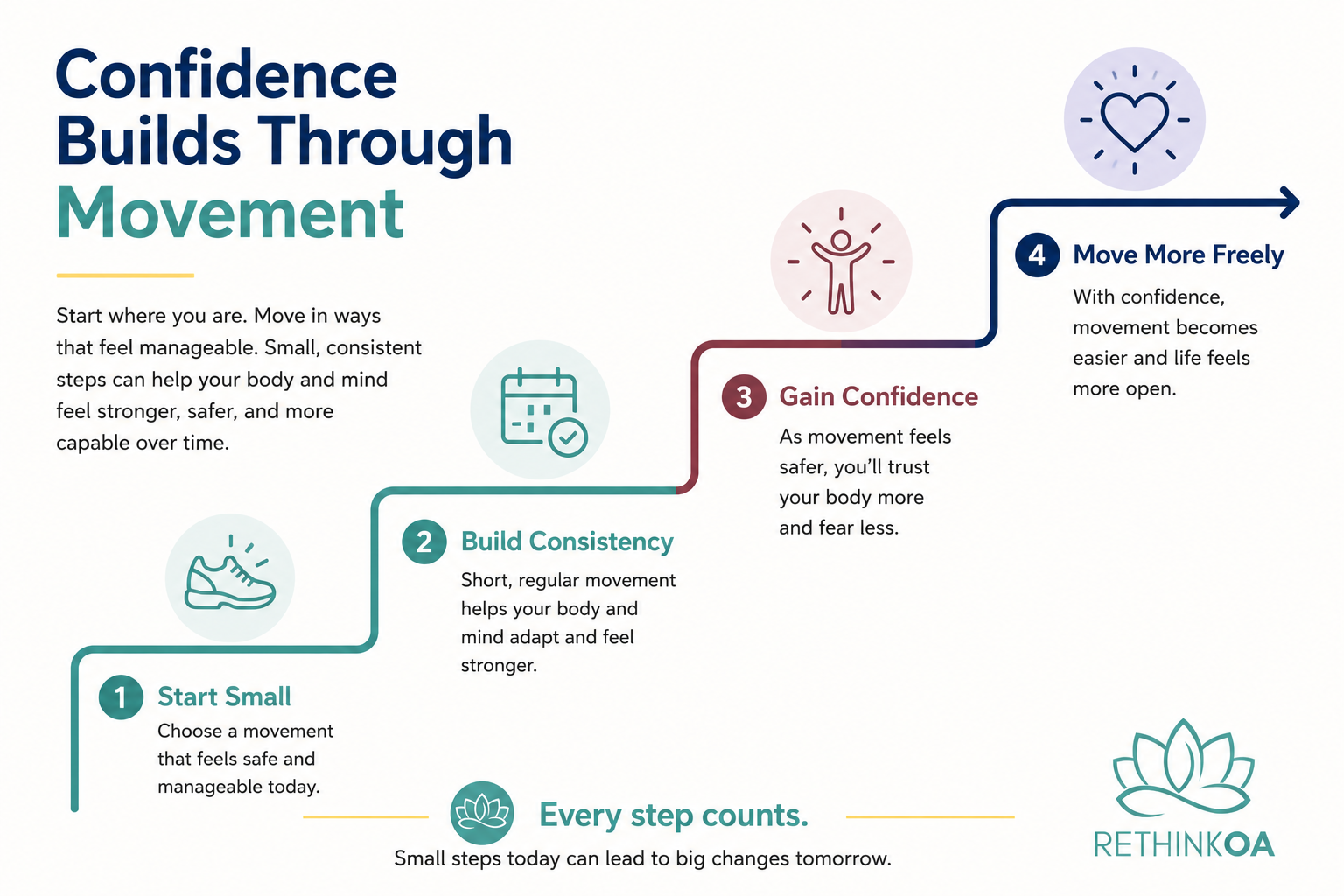
Many people wait for all pain to disappear before they feel comfortable moving again. But confidence is not usually built by waiting for perfect conditions. It is often built gradually through repeated experiences of safe, manageable movement.
A short walk that goes better than expected.
A strengthening exercise that feels possible.
Realizing stiffness improves after getting moving.
These small experiences matter.
Mindset shapes how people respond to osteoarthritis
Researchers use the term "mindset" to describe the beliefs and expectations people hold about themselves, their bodies, and their health.
Psychologist Alia Crum describes mindsets as “core assumptions” that influence motivation, behavior, physiology, and well-being.
In osteoarthritis, mindset can shape how people interpret pain, movement, exercise, and recovery.
For example, one person may think:
“My joints are fragile, and movement will make this worse.”
Another person may think:
“My joints may be sensitive right now, but movement can still help me stay strong and active.”
Those beliefs can influence behavior over time.
Research from our group found that people with osteoarthritis who held more positive mindsets about physical activity and the body tended to be more physically active.
That does not mean mindset cures osteoarthritis or eliminates pain. But beliefs and expectations can influence motivation, confidence, fear, and willingness to engage in movement.
This is especially important because many people with osteoarthritis receive messages that unintentionally promote fear:
- “Don’t wear your knee out.”
- “You should stop running.”
- “Your joint is bone-on-bone.”
- “You’re just getting older.”
Over time, these messages can shape how people see themselves and what they believe their body is capable of doing.
Fear, confidence, and mindset all influence physical activity
One of the biggest misconceptions about physical activity in osteoarthritis is that people simply need more motivation or discipline.
But physical activity behavior is deeply connected to:
- fear
- confidence
- beliefs
- expectations
- previous experiences with pain
Someone who believes movement is dangerous may avoid activity entirely.
Someone who has lost confidence in their body may stop trying things they used to enjoy.
Someone who expects exercise to worsen their pain may interpret every painful experience as confirmation that they should stop moving.
Over time, this can create a difficult cycle:
- less movement
- reduced strength
- more stiffness
- lower confidence
- greater fear around activity
And eventually, daily life can start becoming smaller.
This is one reason organizations such as OARSI, the CDC Arthritis Program, and the Arthritis Foundation consistently recommend physical activity, education, and self-management as core components of osteoarthritis care.
Can these patterns change?
Yes.
Fear of movement, confidence, and mindset are not fixed traits. They can change over time with supportive experiences, education, gradual movement, and the right guidance.
This does not happen overnight.
For many people, rebuilding trust in movement starts small:
- short walks
- gentle strengthening
- modifying activities instead of avoiding them completely
- learning more about pain
- finding enjoyable forms of movement
- working with supportive clinicians
- noticing what the body can still do
In our randomized clinical trial, participants completed the digital mindset intervention Rethink OA, designed to help people better understand osteoarthritis, movement, and pain. Compared with no intervention, participants improved in physical activity, fear of movement, self-efficacy, perceived need for surgery, and physical and mental health. The study was published in npj Digital Medicine.
The goal was not to convince people that pain was imaginary or that they should ignore symptoms.
The goal was to help people develop a healthier and more confident relationship with movement.
Rebuilding trust in movement takes time
Most people with osteoarthritis will still have difficult days, flare-ups, frustration, and moments of uncertainty.
The goal is not to eliminate every symptom or become fearless.
The goal is to help movement feel possible again.
That often starts with understanding that pain, fear, confidence, and mindset are interconnected — and that small movement experiences can gradually help rebuild trust in the body.
FAQ
What is kinesiophobia?
Kinesiophobia is the fear that movement or physical activity will cause pain, injury, or damage. It is common in people with chronic pain conditions, including osteoarthritis.
Is it normal to be afraid to exercise with osteoarthritis?
Yes. Many people with osteoarthritis worry that exercise will worsen joint damage or increase pain. These fears are understandable, especially after painful experiences or confusing medical messages.
Can movement make osteoarthritis worse?
Appropriate physical activity is generally recommended for osteoarthritis and can improve strength, function, mobility, and quality of life. However, symptoms may still fluctuate, and some activities may need to be modified depending on the person and situation.
What is self-efficacy in osteoarthritis?
Self-efficacy refers to confidence in your ability to manage symptoms and stay active despite challenges. Higher self-efficacy has been linked to better physical function and greater physical activity in osteoarthritis.
Can mindset affect osteoarthritis symptoms?
Mindset can influence how people interpret pain, respond to movement, and engage in physical activity. This does not mean osteoarthritis is “all in your head.” It means beliefs and expectations can shape behavior and lived experience.
Why do I avoid activity even when I know exercise helps?
Pain, fear of damage, previous negative experiences, low confidence, and uncertainty about what is safe can all contribute to activity avoidance in osteoarthritis.
Should I push through pain with osteoarthritis?
Not necessarily. The goal is usually not to ignore severe pain, but also not to avoid all movement because of fear. Finding a manageable and sustainable level of activity is often more helpful than extremes of either pushing too hard or stopping completely.
About the Author
Melissa Boswell, PhD, is a bioengineer and digital health founder with nearly a decade of experience working in osteoarthritis, movement science, and human performance. She is the founder of Rethink OA, a clinically validated digital program developed from research conducted with collaborators at Stanford University and published in npj Digital Medicine. Her work focuses on helping people better understand pain, movement, and behavior change in osteoarthritis.

Move More. Fear Pain Less.
Learn how to reduce pain, stay active, and support your joints—starting today.