
How Your Mindset Can Influence Osteoarthritis Pain and Recovery
Jun 01, 2026
When people think about osteoarthritis, they often focus only on the physical side of the condition — cartilage changes, inflammation, stiffness, or what shows up on an X-ray.
But research increasingly shows that another factor can shape the experience of osteoarthritis: mindset.
That does not mean osteoarthritis pain is “all in your head.” Osteoarthritis is a real physical condition that can affect movement, function, and quality of life. But it does mean that the way we think about osteoarthritis can influence the things we pay attention to, how we respond to pain, whether we stay active, and how hopeful or discouraged we feel over time.
This is one reason mindset science has become an important area of research in psychology, pain science, and health behavior.
What Is a Mindset?
Psychologist Alia Crum defines mindsets as “core assumptions about the nature of something.” In other words, mindsets are the lenses through which we interpret our experiences.
Quite literally, mindsets are settings of the mind.
For someone with osteoarthritis, mindsets may develop from years of hearing phrases like:
- “wear and tear”
- “bone-on-bone”
- “degeneration”
- “progressive decline”
They can also come from painful experiences, imaging results, conversations with clinicians, or watching family members struggle with arthritis themselves.
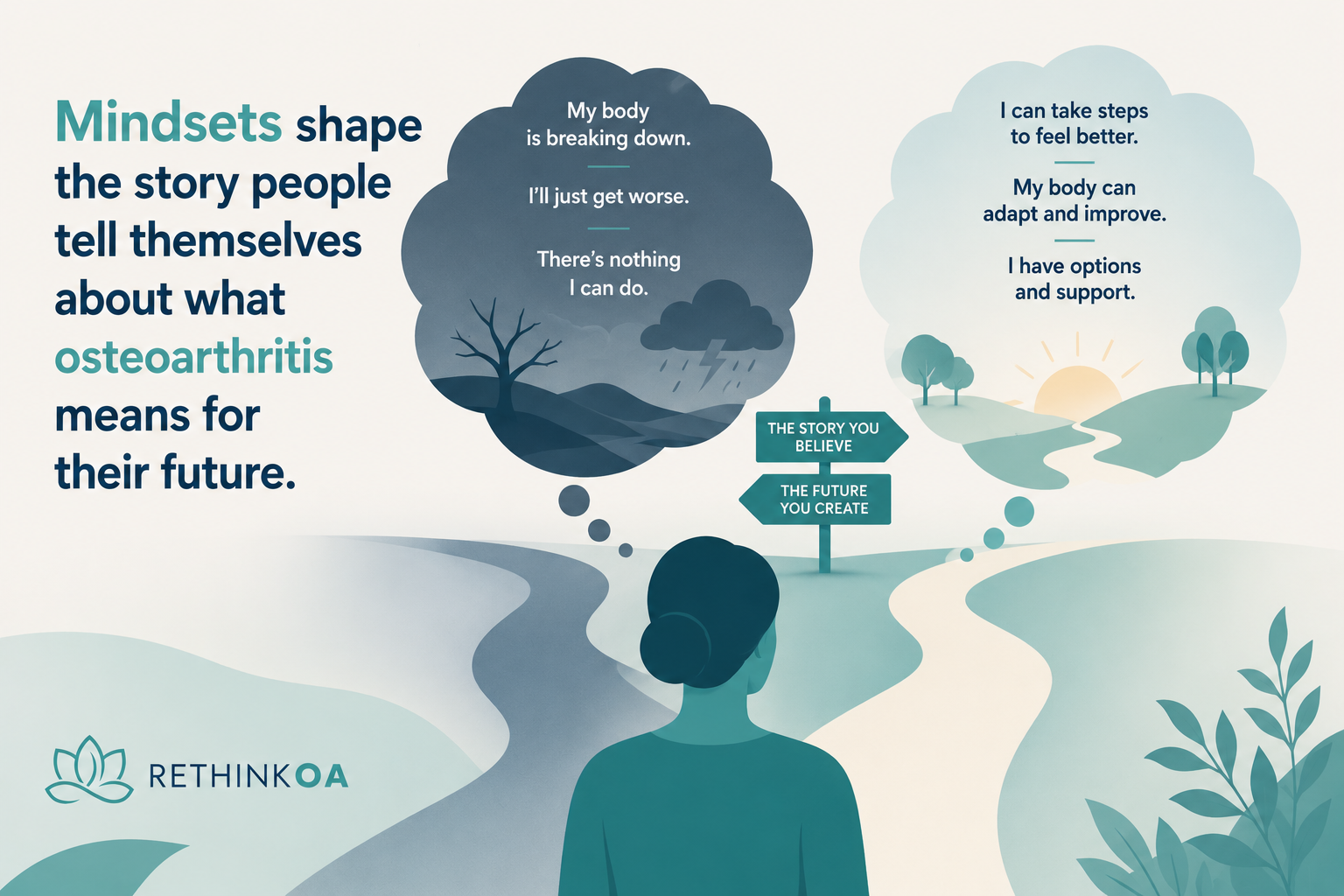
Over time, these experiences shape the story people tell themselves about what osteoarthritis means for their future.
The Mindset That Osteoarthritis Is a Catastrophe
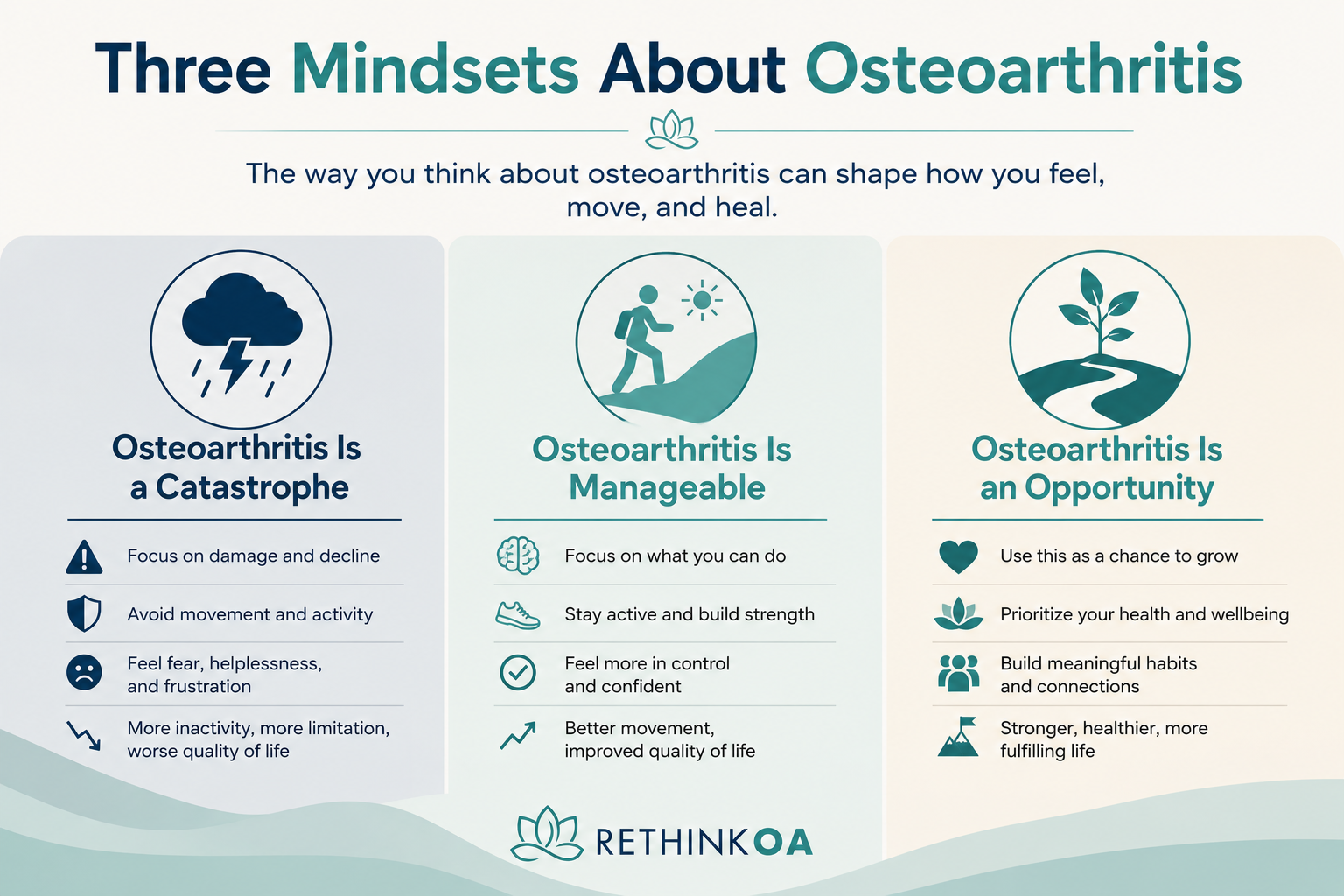
Many people understandably develop the mindset that osteoarthritis is a catastrophe.
This mindset can sound like:
- “My body is breaking down.”
- “Osteoarthritis is ruining my life.”
- “I need to avoid movement.”
- “I’ll only get worse from here.”
These thoughts are understandable. If movement hurts, or if someone has been told their joint is “bone-on-bone,” it makes sense to feel afraid or discouraged.
The problem is not that these thoughts are irrational. The problem is that they can shape behavior in ways that increase fear, stress, inactivity, and hopelessness.
When osteoarthritis feels catastrophic, people may:
- Stop exercising
- Withdraw from activities they enjoy
- Become hyperfocused on symptoms
- Avoid movement out of fear
- Lose confidence in their bodies
Over time, this can contribute to the pain and inactivity cycle we discussed in our earlier post:
5 Things People Get Wrong About Osteoarthritis Pain.
Fear can lead to less movement. Less movement can lead to weakness, stiffness, and lower confidence. And those changes can reinforce the belief that the body is fragile or damaged.
The Mindset That Osteoarthritis Is Manageable
A more useful mindset is not:
“Osteoarthritis is no big deal.”
Instead, it may sound more like:
“This is difficult, but there are still things I can do to improve my health and quality of life.”
The mindset that osteoarthritis is manageable helps direct attention toward:
- Movement
- Treatment
- Adaptation
- Recovery
- Possibility
Importantly, this mindset aligns more closely with what research actually shows.
Research consistently supports conservative management strategies for osteoarthritis, including physical activity, strength training, education, sleep, weight management, and stress reduction. Exercise, in particular, is considered one of the core treatments for osteoarthritis by major medical organizations worldwide.
That does not mean osteoarthritis disappears. And it does not mean recovery is always easy.
But it does mean people are not powerless.
Someone can still have pain, frustration, setbacks, or even eventually need surgery while also believing:
“My body is still capable of adaptation and improvement.”
That mindset matters.
Can Osteoarthritis Become an Opportunity?
At first, this idea can feel uncomfortable.
Osteoarthritis is not something people would choose. And viewing it as an “opportunity” does not mean pretending it is positive or enjoyable.
But some individuals find that considering the mindset that osteoarthritis is opportunistic becomes a turning point in their lives. It may become the reason they:
- Become more in tune with their body
- Start walking consistently
- Begin strength training
- Prioritize sleep
- Reduce stress
- Spend more time outside
- Peconnect with movement
- Improve their overall health
Research suggests that mindsets can influence what we notice, how we respond to challenges, and the behaviors we engage in over time.
For some people, osteoarthritis becomes a catalyst for improving well-being in ways they might not otherwise prioritize.
That is a very different story from:
“My body is simply falling apart.”
Mindset Is Not Just “Positive Thinking”
One of the biggest misconceptions about mindset science is that it means pretending everything is fine.
It does not.
Mindset is not about denying pain or forcing positivity. And it is certainly not about blaming people for their symptoms.
In fact, healthier mindsets often begin with honestly acknowledging challenges while also recognizing the possibility for adaptation and improvement.
Research from Carol Dweck on “growth mindset” highlights how beliefs about change and capability can influence behavior and resilience over time.
A fixed mindset about osteoarthritis might sound like:
“There’s nothing I can do.”
A more adaptive mindset might sound like:
“This is hard, but there are still ways I can support my body and health.”
Small Experiences Can Shift Mindset
Mindset changes rarely happen all at once.
More often, they develop through small experiences over time:
- Completing a short walk successfully
- Feeling stronger after consistent strengthening
- Learning that pain does not always equal harm
- Returning to an activity that once felt impossible
These experiences can gradually rebuild confidence and reduce fear. And that matters because behavior change often starts with belief.
Why This Matters for Osteoarthritis
Osteoarthritis is often framed as an inevitable downward decline. But that narrative can become limiting.
Research shows that many people with osteoarthritis can improve pain, function, confidence, and quality of life through conservative management strategies and consistent movement.
Mindset may influence whether people:
- Engage in those behaviors
- Avoid them
- Stick with them long enough to benefit
- Or give up before improvement happens
In fact, our research shows that mindset is directly related to physical activity and conservative management engagement in indvidiuals with osteaorthritis. This is one reason mindset became a central part of the Rethink OA Program, a digital osteoarthritis intervention developed from research conducted with collaborators at Stanford University and evaluated in a randomized clinical trial published in npj Digital Medicine.
The goal is not to convince people that osteoarthritis is “all mental.”
The goal is to help people better understand the connections between pain, beliefs, movement, stress, behavior, and recovery.
FAQ
Can mindset really affect osteoarthritis pain?
Research suggests that beliefs, expectations, stress, fear, and emotions can influence how pain is experienced. This does not mean osteoarthritis is imaginary, but it does mean pain is shaped by more than joint structure alone.
Is osteoarthritis pain “all in your head”?
No. Osteoarthritis is a real physical condition. However, the nervous system and brain also influence how pain signals are interpreted and experienced.
What is a mindset in osteoarthritis?
A mindset is a core belief or assumption about osteoarthritis, movement, pain, or the body. These beliefs can influence behavior, stress, confidence, and recovery experiences.
Can changing mindset cure osteoarthritis?
No. Mindset does not cure osteoarthritis or regrow cartilage. But it may influence pain, movement behaviors, stress, physical activity, and quality of life.
About the Author
Melissa Boswell, PhD, is a bioengineer and digital health founder with nearly a decade of experience working in osteoarthritis, movement science, and human performance. She is the founder of Rethink OA, a clinically validated digital program developed from research conducted with collaborators at Stanford University and published in npj Digital Medicine. Her work focuses on helping people better understand pain, movement, and behavior change in osteoarthritis.
Move More. Fear Pain Less.
Learn how to reduce pain, stay active, and support your joints—starting today.