
Why Knee Osteoarthritis Pain Is More Than What Shows Up on an X-Ray
Jun 08, 2026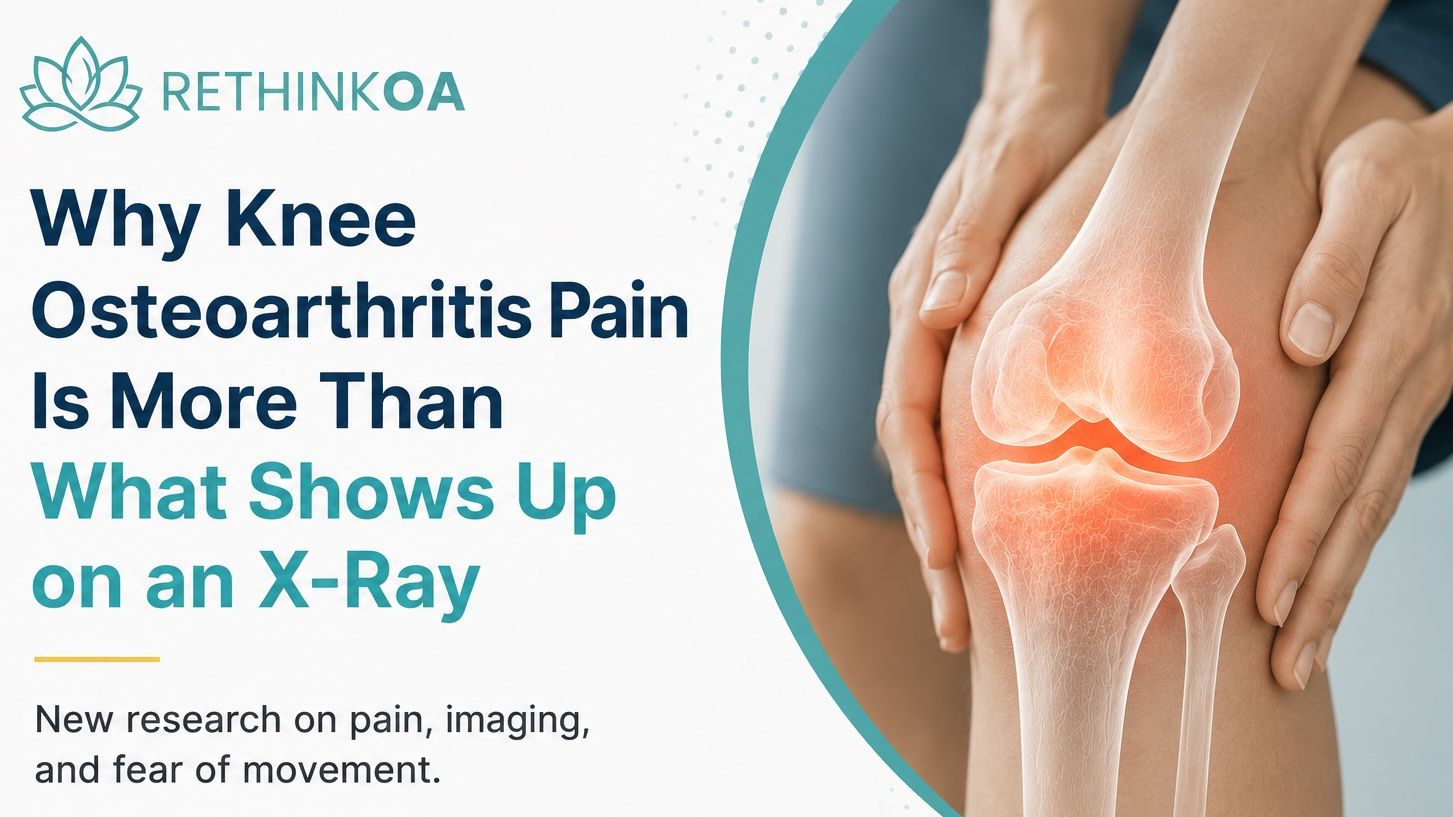
If you’ve ever been told you have “bone-on-bone” arthritis or seen an X-ray report that sounded alarming, you’re not alone. Many people with knee osteoarthritis (OA) leave appointments wondering whether every step they take is causing further damage. However, research is helping us better understand something important: Pain and imaging findings do not always align.
Some individuals with severe arthritis visible on an X-ray report surprisingly little pain, while others experience significant discomfort despite mild imaging findings. Researchers are increasingly aware that knee OA pain results from more than just cartilage alterations. Two recent studies emphasize the importance of this — showing why understanding pain, movement, and fear can be just as crucial as interpreting imaging results.
Your X-ray matters — but it is not the whole story
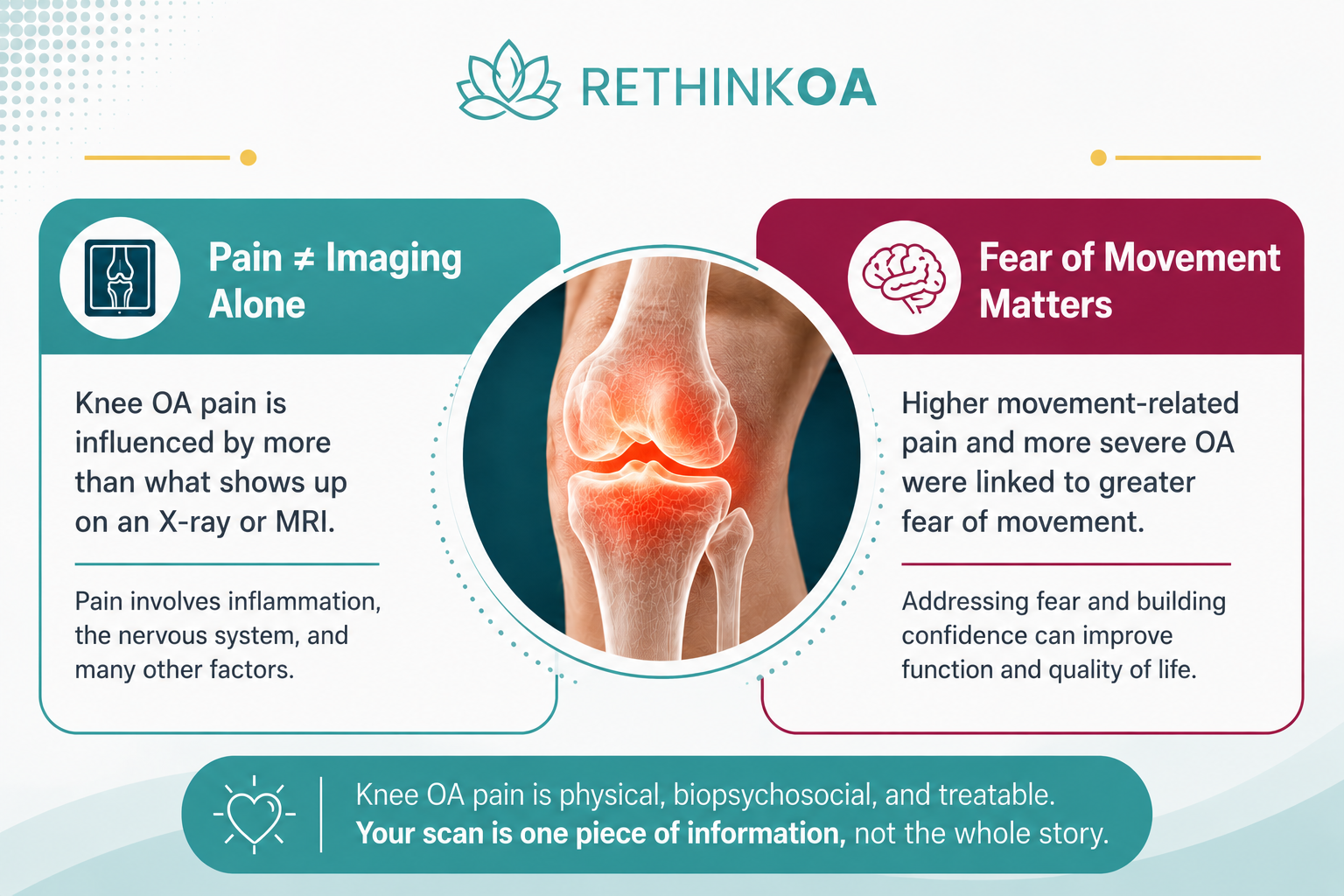
Osteoarthritis was traditionally seen as a straightforward “wear-and-tear” issue, mainly focusing on cartilage degradation and joint deterioration. However, recent research highlights that knee OA is far more intricate. A review in Skeletal Radiology explains that osteoarthritis affects the entire joint, including cartilage, bone, the synovium (joint lining), ligaments, muscles, and the nervous system. It also stresses that pain results from various biological and neurological factors, not just structural damage observable on imaging scans. In essence, while an X-ray can reveal joint changes, it cannot fully convey how sensitive the nervous system has become, the extent of tissue inflammation, or how the brain processes pain. This is one reason imaging findings and pain levels often don’t perfectly align.
Why pain may seem larger than the image
Pain isn’t just in your mind; it’s real. However, it’s also influenced by more than just tissue damage, as the nervous system significantly affects how pain is perceived. Over time, ongoing pain can make the body’s alarm system more sensitive, a process often called sensitization. This makes the nervous system more protective and reactive, so activities that once felt safe or neutral might start to seem painful or threatening. This doesn’t mean tissue damage is worsening quickly with each pain episode; rather, the body is trying to protect you.
Branco et al. explain that osteoarthritis pain can involve:
- Local inflammation
- Bone marrow lesions
- Synovitis (joint lining inflammation)
- Peripheral sensitization
- Central sensitization and nervous system changes
These factors help explain why two people with similar X-rays might experience completely different levels of pain.
Some imaging findings may be more closely linked to pain than others.
Not all results mean the same thing.
The review highlighted that certain MRI findings, such as synovitis or joint inflammation, bone marrow lesions, and specific meniscal injuries or extrusion, tend to be more strongly associated with pain. This matters because many people are often told broad phrases like: "Your knee is worn out," "You have severe arthritis," or "It’s bone-on-bone." However, these statements tend to oversimplify what’s actually happening. While imaging provides valuable information, it does not determine your future, function, or potential for improvement.
Fear of movement is part of the picture
A recent study published in PeerJ examined a common but often overlooked issue among individuals with knee OA: fear of movement. Researchers analyzed 109 adults with knee osteoarthritis and found that higher movement-related pain and more severe radiographic OA correlated with increased kinesiophobia—the fear that movement may cause pain or damage.
This correlation is understandable. When movement causes pain, it's natural to become cautious. Many avoid stairs, long walks, exercise, kneeling, or other activities to prevent further joint wear.
However, over time, such avoidance can lead to a problematic cycle:
- Less movement
- Increased stiffness
- Decreased strength
- Reduced confidence
- Heightened fear
- Greater pain sensitivity
The authors emphasized that knee OA should not be seen solely as a “structural disorder,” since psychological and behavioral factors also affect pain levels and functional ability. We discussed this pain cycle in a previous blog post.
Pain involves both physical and biopsychosocial factors
People sometimes worry that terms like "mind-body" or "biopsychosocial" suggest their pain is being dismissed. However, this is not what the research indicates. Knee OA is not solely structural, nor is it exclusively psychological; it involves both physical and biopsychosocial elements.
Your joints, muscles, inflammation, and nervous system all matter, as do your emotions, beliefs, stress, and past experiences. These systems interact continuously.
That’s why effective osteoarthritis treatment often includes more than medication or imaging: activities like movement and exercise, strengthening, sleep and recovery, pain education, building confidence with movement, reducing fear and avoidance, stress management, and social support. These strategies are not just “soft” treatments—they are evidence-based methods that target the systems involved in pain.
What this means for you
If you have knee OA, keep these key points in mind: Your pain is genuine, even if imaging doesn't fully explain it. A frightening X-ray doesn't mean you're doomed; many people stay active and enhance their function despite changes seen in imaging. Pain during movement doesn't always indicate damage; it can sometimes reflect a protective, sensitized nervous system rather than actual injury. While fear of movement is natural, avoiding movement completely can lead to increased limitations over time. Building confidence is essential; learning how to move safely and gradually can lessen fear, boost strength, and support long-term mobility.
Questions you may want to ask your clinician
-
What do my imaging findings actually mean?
-
Are there signs of inflammation contributing to my symptoms?
-
Could pain sensitivity or fear of movement be playing a role?
-
What types of movement are safe for me?
-
How can I gradually rebuild confidence with activity?
-
Would physical therapy or guided exercise help?
The bottom line
Your scan offers a single piece of information, but it doesn't tell the whole story. Pain in knee osteoarthritis is influenced by factors such as the joint, the nervous system, movement experiences, inflammation, beliefs, stress, and behavior. Recognizing this doesn't diminish the reality of your pain; instead, it provides a more comprehensive and hopeful understanding of potential improvements.
You are more than just your X-ray, and your future isn't determined solely by an image.
This is exactly what we teach in Rethink OA. If you'd like to go deeper into what your mean does and doesn't mean, and learn tangible strategies for overcoming fear of movement, you can start the program here.
FAQ
Why does my knee osteoarthritis pain not match my X-ray?
This is very common. Research shows that imaging findings and pain levels do not always align in osteoarthritis. Some people with significant joint changes have relatively little pain, while others with milder imaging findings experience severe symptoms. Pain is influenced by many factors beyond joint structure alone, including inflammation, the nervous system, stress, fear, sleep, and physical activity levels.
Can you have severe arthritis on an X-ray and still function well?
Yes. Many people with “severe” osteoarthritis on imaging continue to walk, exercise, travel, work, and live active lives. Imaging findings are only one part of the picture and do not fully determine pain, mobility, or quality of life.
Does pain during movement mean I am damaging my knee?
Not always. Pain can sometimes reflect sensitivity in the nervous system rather than ongoing tissue damage. This does not mean pain should be ignored, but it does mean that some discomfort during activity is not necessarily harmful. Appropriate movement and exercise are considered core treatments for knee osteoarthritis.
What is kinesiophobia?
Kinesiophobia is the fear that movement or exercise will cause pain, injury, or additional damage. It is common in people with chronic pain conditions, including knee osteoarthritis. Over time, fear of movement can lead to inactivity, which may contribute to weakness, stiffness, and reduced confidence.
Can fear of movement make osteoarthritis feel worse?
Research suggests it can. Avoiding movement out of fear may reduce strength, mobility, and physical activity levels, all of which can contribute to worsening pain and function over time. Building confidence through safe, gradual movement is often an important part of recovery.
What imaging findings are most associated with knee OA pain?
Research suggests that findings such as joint inflammation (synovitis), bone marrow lesions, and some meniscal injuries may relate more strongly to pain than cartilage loss alone. However, imaging still cannot fully explain the pain experience.
If osteoarthritis pain involves the nervous system, does that mean it is psychological?
No. Osteoarthritis is a real physical condition. But pain is influenced by both the body and the nervous system. Modern pain science recognizes that biological, psychological, and social factors all contribute to how pain is experienced. This is often referred to as a biopsychosocial approach to pain.
Can exercise still help if I have “bone-on-bone” arthritis?
For many people, yes. Exercise and strengthening are widely recommended for knee osteoarthritis, including in people with more advanced disease. Stronger muscles help support the joint, improve stability, and reduce physical limitations. The key is finding the right type and amount of movement for your body.
Should I avoid activity if my knee hurts?
Not necessarily. Completely avoiding activity can sometimes make osteoarthritis feel more limiting over time. A better approach is often learning how to move safely, gradually, and consistently while building confidence and strength.
What are the best treatments for knee osteoarthritis?
Most clinical guidelines recommend conservative strategies first, including:
- Physical activity and exercise
- Strength training
- Weight management
- Physical therapy
- Education and pain science (such as Rethink OA)
- Sleep and stress management
- Building confidence with movement
For some individuals, injections or surgery may also become part of treatment.
About the Author
Melissa Boswell, PhD, is a bioengineer and digital health founder with nearly a decade of experience working in osteoarthritis, movement science, and human performance. She is the founder of Rethink OA, a clinically validated digital program developed from research conducted with collaborators at Stanford University and published in npj Digital Medicine. Her work focuses on helping people better understand pain, movement, and behavior change in osteoarthritis.

Move More. Fear Pain Less.
Learn how to reduce pain, stay active, and support your joints—starting today.