
What Actually Causes Osteoarthritis Pain?
Jun 22, 2026
If you have osteoarthritis, you've likely heard common explanations such as 'Your cartilage is wearing away,' 'Your knee is bone-on-bone,' or 'Your joint is degenerating.' While these statements give part of the story, they don't fully explain why osteoarthritis causes pain.
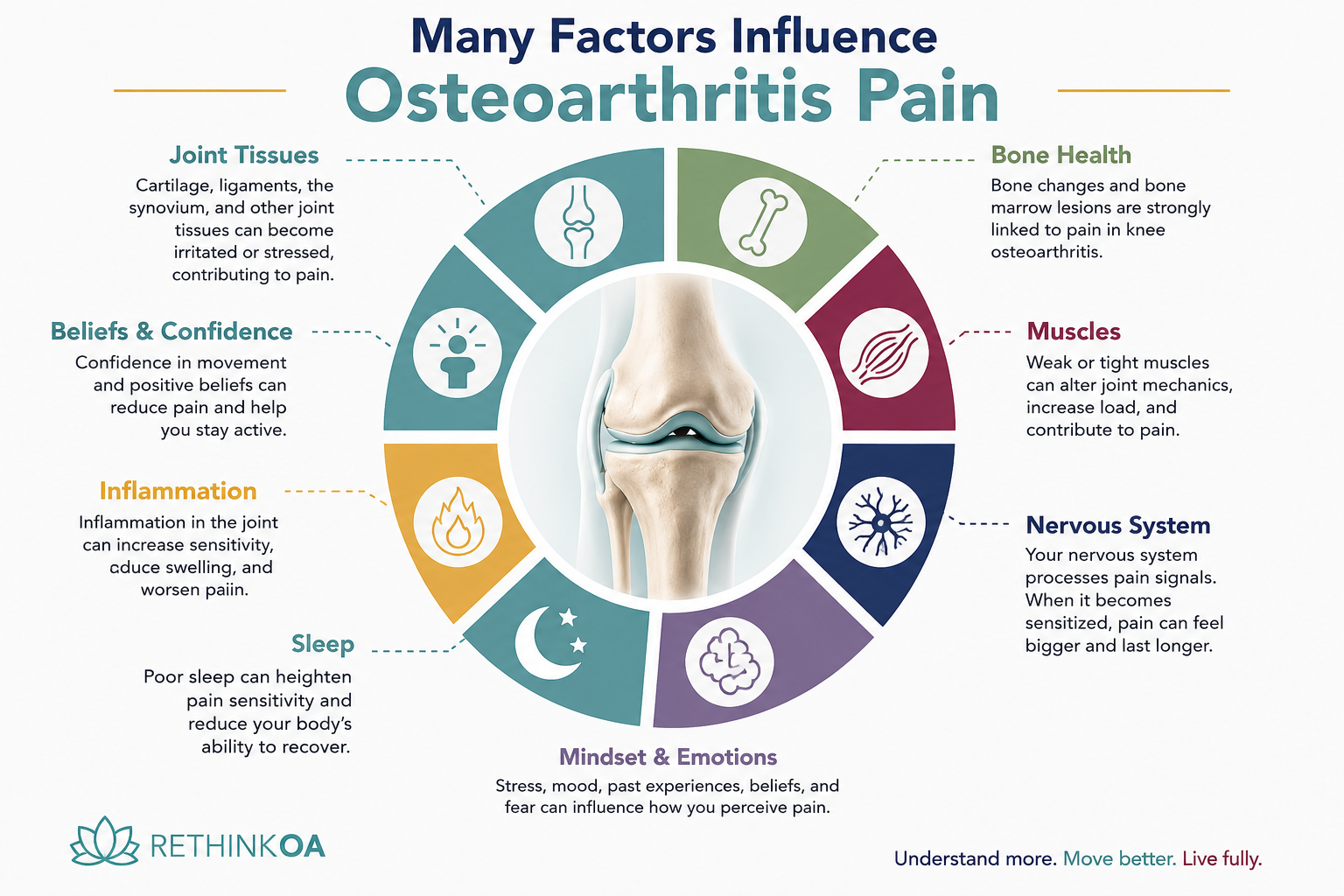
Modern pain science has shown that pain is affected by much more than just cartilage. This doesn't mean osteoarthritis pain isn't real or that it's 'all in your head,' nor does it dismiss the importance of joint changes. Research indicates that osteoarthritis pain involves multiple factors, including joint tissues, inflammation, muscles, the nervous system, movement, sleep, stress, and our beliefs about the condition (Hunter & Bierma-Zeinstra, The Lancet).
Recognizing this can be empowering because it clarifies why pain often doesn't match X-ray findings. As detailed in our earlier article, Why Knee Osteoarthritis Pain Is More Than What Shows Up on an X-Ray, imaging results and pain levels don't always align: some individuals with severe arthritis have little pain, while others suffer significant pain despite milder imaging.
So, what truly causes osteoarthritis pain? The answer is that various systems play a role in how your knee feels.
Osteoarthritis Is More Than Cartilage Wear
For many years, osteoarthritis was mainly seen as a "wear-and-tear" condition resulting from cartilage breakdown over time. However, modern research shows that osteoarthritis impacts the entire joint. In a landmark review published in The Lancet, Hunter and Bierma-Zeinstra characterized osteoarthritis as a whole-joint disease that involves cartilage, bone, ligaments, muscles, the synovium (joint lining), and other surrounding tissues, not just cartilage degeneration. This distinction is crucial because cartilage lacks nerves. If cartilage alone caused pain, the extent of cartilage loss would directly predict symptoms. Since it does not, it indicates that other joint components also contribute significantly to pain.
Inflammation Can Contribute to Pain
Many people believe osteoarthritis is not an inflammatory condition because it differs from autoimmune diseases like rheumatoid arthritis. However, inflammation still plays a significant role.
Research has shown that inflammation within the synovium, known as synovitis, is associated with pain severity and symptom progression in osteoarthritis. Several publications have highlighted synovitis as one of the structural features most consistently associated with pain (Sellam & Berenbaum, Panichi et al.).
Inflammation can heighten tissue sensitivity within the joint, leading to swelling, stiffness, and discomfort. This explains why pain levels might vary day to day. Your symptoms are not solely determined by the amount of cartilage left in your knee; they also depend on the current biological processes occurring within the joint.
Bone Can Be a Source of Pain Too
When considering osteoarthritis, people often focus on cartilage. However, bone can be a significant source of pain. Researchers have identified structures called bone marrow lesions as some of the most strongly linked imaging findings to pain in knee osteoarthritis. In a well-known study published in the Annals of Internal Medicine, Felson and colleagues observed that increases in bone marrow lesions were associated with increased knee pain over time. These lesions are areas of stress and biological activity within the bone beneath the joint surface. This understanding helps explain why two individuals with similar cartilage loss may experience very different symptoms. The structures involved in pain are often far more complex than what is implied by the term "bone-on-bone."
Muscles Influence How Your Joints Feel
As osteoarthritis causes pain, many people tend to move less, which is understandable. However, reduced activity over time can lead to muscle weakness, decreased physical fitness, stiffness, and diminished confidence. Muscles support joints and help absorb impact during movement. When muscles weaken, daily activities become more challenging and physically demanding. This creates a cycle: pain reduces movement, which leads to muscle weakness, making movement harder and potentially increasing pain further.
Studies show that muscle weakness correlates with poorer function and greater disability in individuals with knee osteoarthritis. This is why organizations like the Osteoarthritis Research Society International (OARSI), the Arthritis Foundation, and the CDC recommend exercise and strength training as primary treatments.
Your Nervous System Influences Pain Too
One of the most important developments in modern pain science is the understanding that pain is not produced by tissues alone. Pain is an experience created by the nervous system.
In 2020, the International Association for the Study of Pain (IASP) updated its definition of pain, emphasizing that pain is influenced by biological, psychological, and social factors.
Pain exists to protect us. When you step on something sharp, it prompts you to move away from harm. A sprained ankle also causes pain to safeguard the injured area. However, sometimes the body's alarm system becomes overly sensitive.
Researchers Lorimer Moseley and David Butler explain that the nervous system can become progressively more protective, leading to activities once felt as comfortable now being painful, even without new injuries. This process is known as sensitization, which does not mean the pain is imaginary but rather that the nervous system's protective mechanisms are heightened. Pain is still real; only the system generating it has become more sensitive.
Stress, Sleep, and Emotions Affect Pain
Have you ever noticed that your pain seems to worsen after poor sleep or during particularly stressful weeks? You're not imagining it; increasing evidence supports these links. Factors such as sleep quality, stress, mood, social support, expectations, and past experiences all affect how we perceive pain. This idea is known as the biopsychosocial model of pain. However, some misunderstand this and think it implies pain is purely psychological, which is not true. The model highlights that pain results from complex interactions within various systems in the body and brain. Your joints, nervous system, and personal experiences all play roles in shaping your pain perception.
Fear Can Make Pain Feel Bigger
Fear is another significant factor. If you think movement harms your joints, it's natural to become more cautious. Many people with osteoarthritis start avoiding activities due to concerns about worsening their condition. Over time, this avoidance can lead to decreased activity, increased stiffness, reduced confidence, greater pain sensitivity, and diminished physical function. Fear of movement (or kinesiophobia) is linked to higher pain levels, poorer physical function, and less activity participation among those with osteoarthritis and other musculoskeletal issues. That's why we emphasize mindset and confidence at Rethink OA.
The Good News: Many Contributors to Pain Are Modifiable
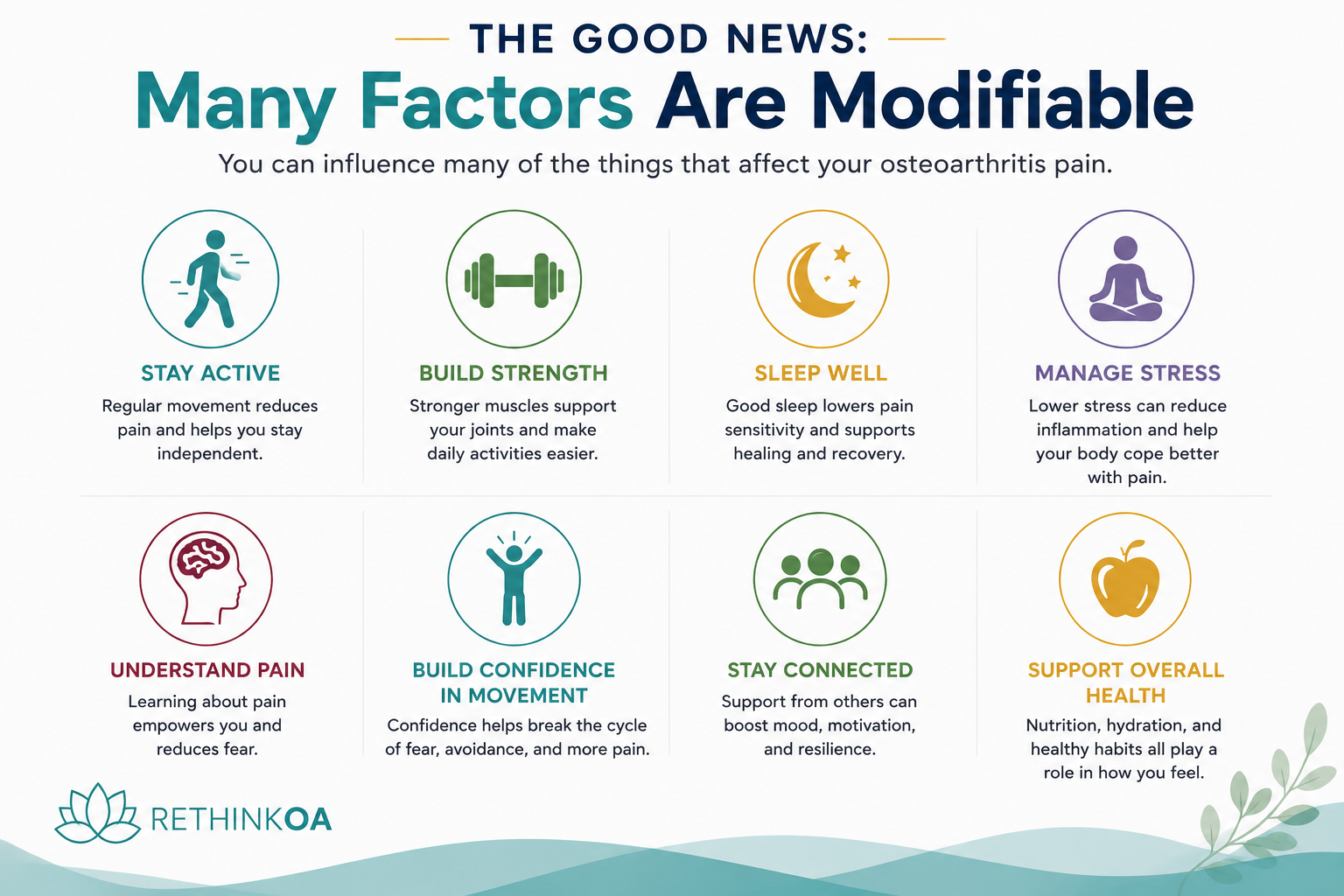
One of the most hopeful findings from modern osteoarthritis research is that many contributors to pain can change. You may not be able to instantly change the structure of a joint.
But you can influence many of the systems involved in pain, including:
- Strength
- Physical activity levels
- Sleep
- Stress management
- Confidence with movement
- Fear of movement
- Pain education
- Overall health behaviors
If osteoarthritis pain were caused solely by the loss of cartilage, then these treatments wouldn't be effective. However, research consistently indicates they are. This is why we remain hopeful about the potential for improvement. For those with osteoarthritis, it's important to remember: your pain is genuine, and your symptoms aren't just "in your head." Still, your pain is affected by more than just cartilage loss. Factors like inflammation, bone health, muscle condition, nervous system activity, sleep quality, stress levels, fear, and beliefs all play a role.
While this might seem complex, it also offers hope, as many of these systems are modifiable. Consequently, there are often more chances for improvement than many realize.
FAQ
If cartilage doesn't have nerves, why does osteoarthritis hurt?
Pain can come from many structures surrounding the joint, including bone, synovium, ligaments, muscles, and other tissues. The nervous system also plays an important role in how pain is experienced.
Is osteoarthritis pain all in my head?
No. Osteoarthritis is a real physical condition. However, modern pain science shows that pain is influenced by biological, psychological, and social factors working together. [CITATION: Raja et al., PAIN, 2020]
Can stress make osteoarthritis pain worse?
Yes. Stress can influence the nervous system and increase pain sensitivity. Many people notice changes in symptoms during periods of stress.
Why does my pain change from day to day?
Pain is influenced by many factors, including inflammation, activity levels, sleep, stress, mood, and nervous system sensitivity.
Can exercise reduce osteoarthritis pain?
Exercise is one of the most consistently recommended treatments for osteoarthritis and has been shown to improve pain, physical function, and quality of life.
Why do my X-rays not match my symptoms?
Research consistently shows that imaging findings and pain levels do not always align. Some people have severe joint changes with little pain, while others experience substantial pain despite milder imaging findings.
About the Author
Melissa Boswell, PhD, is a bioengineer and digital health founder with nearly a decade of experience working in osteoarthritis, movement science, and human performance. She is the founder of Rethink OA, a clinically validated digital program developed from research conducted with collaborators at Stanford University and published in npj Digital Medicine. Her work focuses on helping people better understand pain, movement, and behavior change in osteoarthritis.

Move More. Fear Pain Less.
Learn how to reduce pain, stay active, and support your joints—starting today.