
How to Make Exercise More Enjoyable When You Have Osteoarthritis
Jun 15, 2026
If you have osteoarthritis, you've probably heard countless times that exercise is one of the best things you can do for your joints. However, knowing exercise is beneficial and actually wanting to do it are quite different. For many, exercise feels like a chore. Visuals of intense workouts, discomfort, or long gym sessions can make physical activity seem tiring, stressful, and hard to keep up with. It's understandable that many struggle to stay active, even when aware that it could ease their symptoms.
The good news is movement doesn't have to be this way. A key factor influencing whether we stay active isn't our fitness level but our mindset about exercise. At Rethink OA, we emphasize how our mental attitudes shape our experiences. Just as our mindset about osteoarthritis affects our response to it, our attitude toward exercise impacts how we experience movement. When exercise feels boring, stressful, or painful, we're less likely to engage in it. But when movement is seen as enjoyable, meaningful, and rewarding, staying active becomes much more achievable.
Rethink What Counts as Exercise
One reason exercise can seem intimidating is that many people have a limited idea of what "counts." When they hear the word exercise, they often imagine running, weightlifting, pushing themselves to exhaustion, or spending hours at the gym. However, movement takes many forms. It can be walking the dog, gardening, dancing in the kitchen, swimming, doing yoga, stretching, playing with grandchildren, hiking with friends, riding a bike, or even certain household chores that involve physical activity.
Studies show that various types of movement can help improve symptoms of osteoarthritis. There isn't a single miracle exercise everyone must do. The best exercise is usually the one that suits your body, lifestyle, and interests. This perspective can be empowering because it gives you options. When you have options, you're more likely to discover movement you genuinely enjoy.
Why Enjoyment Matters More Than Motivation
Many believe they need extra motivation to exercise, but motivation naturally fluctuates. Studies indicate that enjoyment is a key predictor of long-term physical activity because people tend to return to activities they find pleasurable and avoid those they dislike. Kelly McGonigal's book, The Joy of Movement, resonates with many because it encourages viewing exercise not just as a means to future health, but as an immediate source of benefits like improved mood, stress relief, social connection, and increased vitality. Instead of asking, "How many calories did I burn?" consider asking, "What did I enjoy about that experience?" This small change can significantly transform your relationship with exercise.
Exercise Can Be Relaxing and Pleasurable
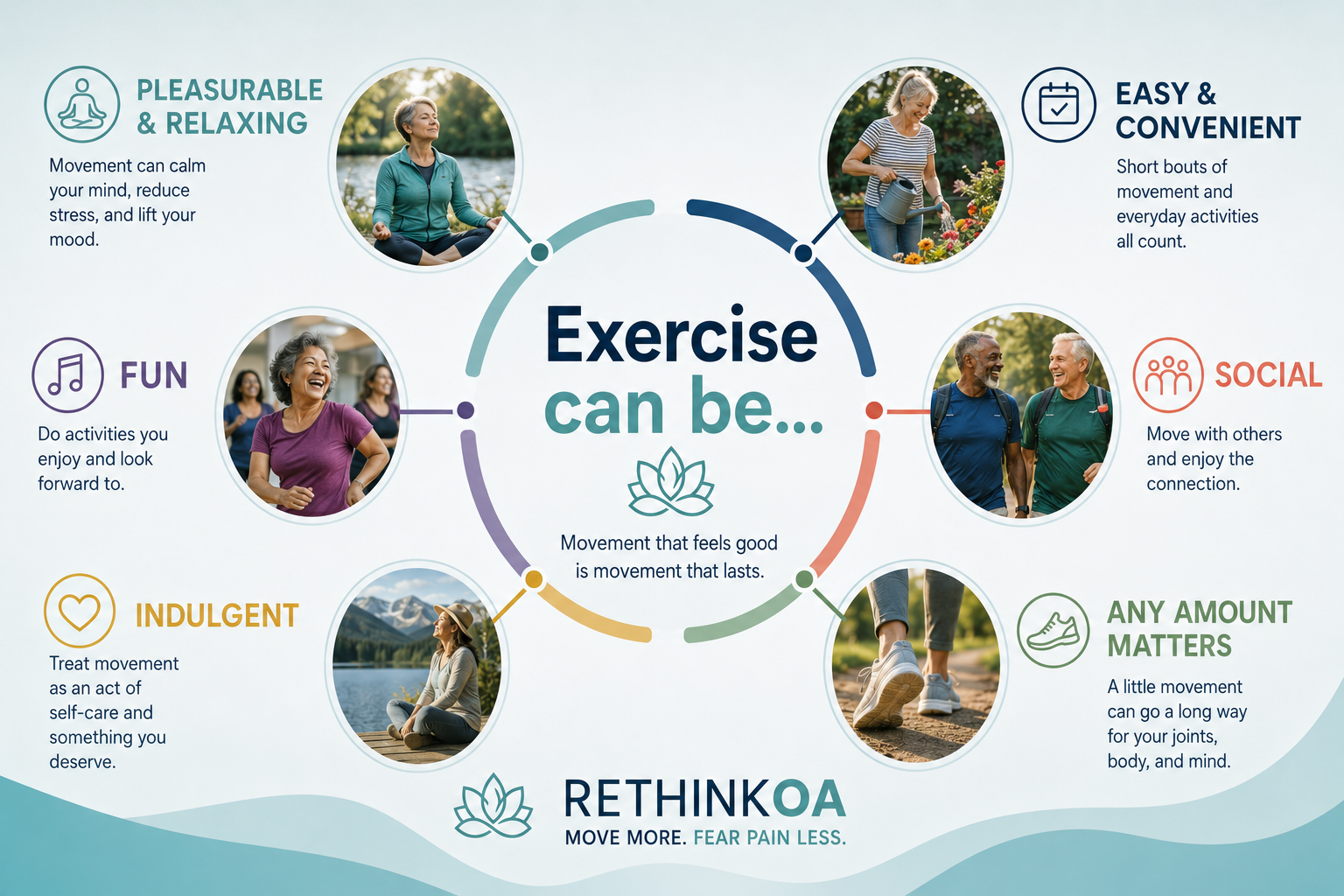
Many individuals with osteoarthritis believe that exercise should feel challenging. However, movement can also be soothing. Activities such as yoga, stretching, tai chi, walking, and gentle cycling enable you to move your body while focusing on your breath and calming your mind. Movement can be a way to reduce stress rather than increase it. A simple way to enjoy exercise more is to do it outdoors. Research indicates that spending time in nature can boost mood and mental health. Whether walking in a park, gardening, or hiking a trail, the benefits extend beyond just physical activity. Instead of concentrating solely on the exercise, pay attention to:
- The sunlight on your skin
- The sounds of birds
- The sensation of fresh air
- The chance to disconnect from daily stress
This approach integrates movement into a richer experience.
Exercise Can Be Easy and Convenient
Many people mistakenly think exercise only "counts" if it's intense, believing they must work out for an hour or push themselves to exhaustion for it to matter. However, evidence shows otherwise. Short movements accumulate—like a ten-minute walk, a few minutes of stretching, taking the stairs, walking while on the phone, gardening, or playing with grandchildren all count. A helpful question to ask yourself is: "What movement am I already doing that I haven't acknowledged?" Recognizing daily movements often makes exercise seem more approachable and less overwhelming. Remember, the goal isn't perfection but simply to move more.
Exercise Can Be Fun and Social
Humans are inherently social beings. One reason many enjoy sports, group fitness, hiking clubs, and walking groups is that these activities transform movement into a means of connecting with others. Sometimes, the activity itself isn’t the main draw; it’s the people.
If maintaining an active lifestyle is difficult, try making movement more social: walk with a friend, join a local class, invite family members to participate, call someone while walking, or join community events that involve movement. Many find they are more consistent when someone else expects them to participate, and often, the conversations they have become more memorable than the exercise itself.
Exercise Can Be a Form of Self-Care
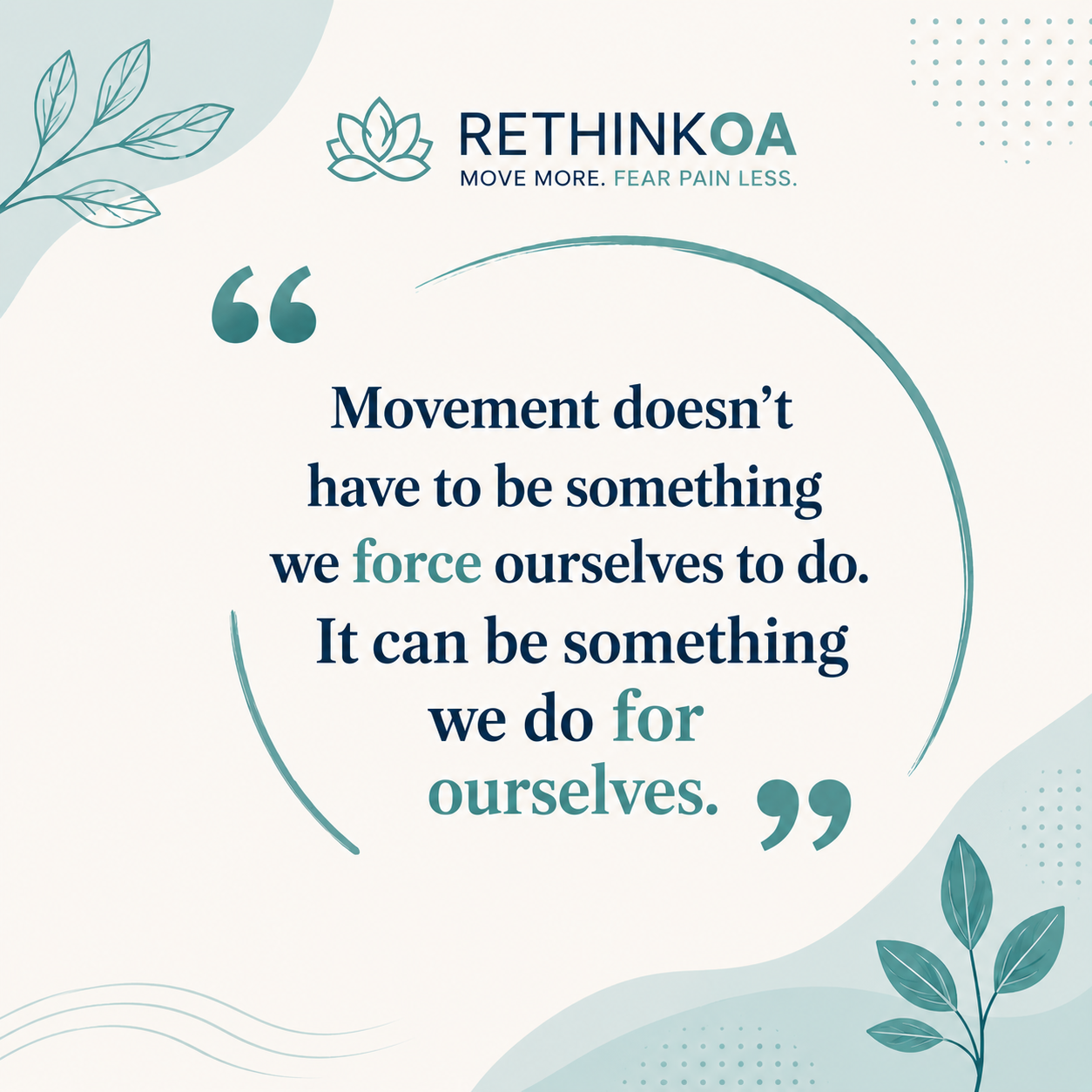
One of my favorite ideas from The Joy of Movement is that movement doesn't have to be something we force ourselves to do. It can be something we do for ourselves. Many people see exercise as just another task on a long to-do list. But what if you looked at it differently? What if movement was your personal time? A moment to clear your mind. An opportunity to connect with your body. A time to enjoy outdoors. A way to boost your mood. A chance to show yourself care. When exercise is viewed as self-care rather than a duty, it often becomes much easier to stick with.
What If Exercise Hurts?
This is one of the most common concerns among people with osteoarthritis. Many people assume that pain during activity means they are damaging their joints. However, as we discussed in our previous article on pain and imaging findings in osteoarthritis, pain and tissue damage are not always closely related.
Pain is influenced by many factors, including:
- Joint tissues
- Inflammation
- The nervous system
- Stress
- Sleep
- Fear of movement
- Past experiences
Some discomfort during activity does not automatically mean harm is occurring. This doesn't mean you should ignore pain or push through severe symptoms. Instead, it means learning how to move safely, gradually, and confidently.
If you're interested in learning more about this topic, you may also enjoy our articles:
- Does Exercise Make Osteoarthritis Worse?
- How Your Mindset Can Influence Osteoarthritis Pain and Recovery
- Why Knee Osteoarthritis Pain Is More Than What Shows Up on an X-Ray
A Simple Challenge
Over the next week, consider trying one of these options:
- Play your favorite music while walking.
- Move outdoors when possible.
- Invite a friend to join your activity.
- Explore a new activity you've always wanted to try (or maybe one you haven't thought about before).
- Spend five minutes observing what makes movement enjoyable for you.
- Replace a large fitness goal with a smaller, achievable one.
Remember, it's not about perfection.
The aim is to find ways to make moving your body more enjoyable, relaxing, simple, accessible, fun, social, or indulgent.
When exercise feels enjoyable, maintaining an active lifestyle becomes much easier.
FAQ
What is the best exercise for osteoarthritis?
There is no single best exercise for osteoarthritis. Walking, cycling, swimming, strength training, yoga, tai chi, and water aerobics have all been shown to improve symptoms. The best exercise is the one you enjoy and can do consistently.
Can exercise make osteoarthritis worse?
For most people, appropriately selected exercise does not worsen osteoarthritis. In fact, regular movement is one of the most effective non-surgical treatments for reducing pain and improving function.
What if I have pain while exercising?
Some discomfort during activity can be normal, especially when starting a new routine. Pain does not always mean damage. If symptoms are severe or continue to worsen after exercise, speak with a healthcare professional about modifying your program.
How much exercise should I do with osteoarthritis?
Start where you are. Even short bouts of movement can provide benefits. Walking for ten minutes, stretching, gardening, or taking movement breaks throughout the day all count as physical activity.
Is walking good for knee osteoarthritis?
Yes. Walking is one of the most commonly recommended forms of exercise for knee osteoarthritis. It can improve mobility, strengthen muscles, reduce stiffness, and support overall health.
Why do I hate exercise?
Many people have learned to associate exercise with discomfort, pressure, guilt, or failure. Finding activities that feel enjoyable, meaningful, social, or relaxing can help change your experience and make movement feel more rewarding.
Ready to Rethink Exercise?
Living with osteoarthritis doesn't mean exercise has to be seen as a punishment. Movement can be calming, social, and fun. It might even become something you anticipate positively. At Rethink OA, we support individuals in cultivating evidence-based mindsets that lessen fear, build confidence, and make staying active with osteoarthritis easier. Small changes in your mindset about movement can greatly influence how you experience it and how frequently you engage in it.
About the Author
Melissa Boswell, PhD, is a bioengineer and digital health founder with nearly a decade of experience working in osteoarthritis, movement science, and human performance. She is the founder of Rethink OA, a clinically validated digital program developed from research conducted with collaborators at Stanford University and published in npj Digital Medicine. Her work focuses on helping people better understand pain, movement, and behavior change in osteoarthritis.

Move More. Fear Pain Less.
Learn how to reduce pain, stay active, and support your joints—starting today.