
Research Spotlight: Knee Osteoarthritis Is More Common Than We Thought — and Why That's Not All Bad News
Oct 12, 2026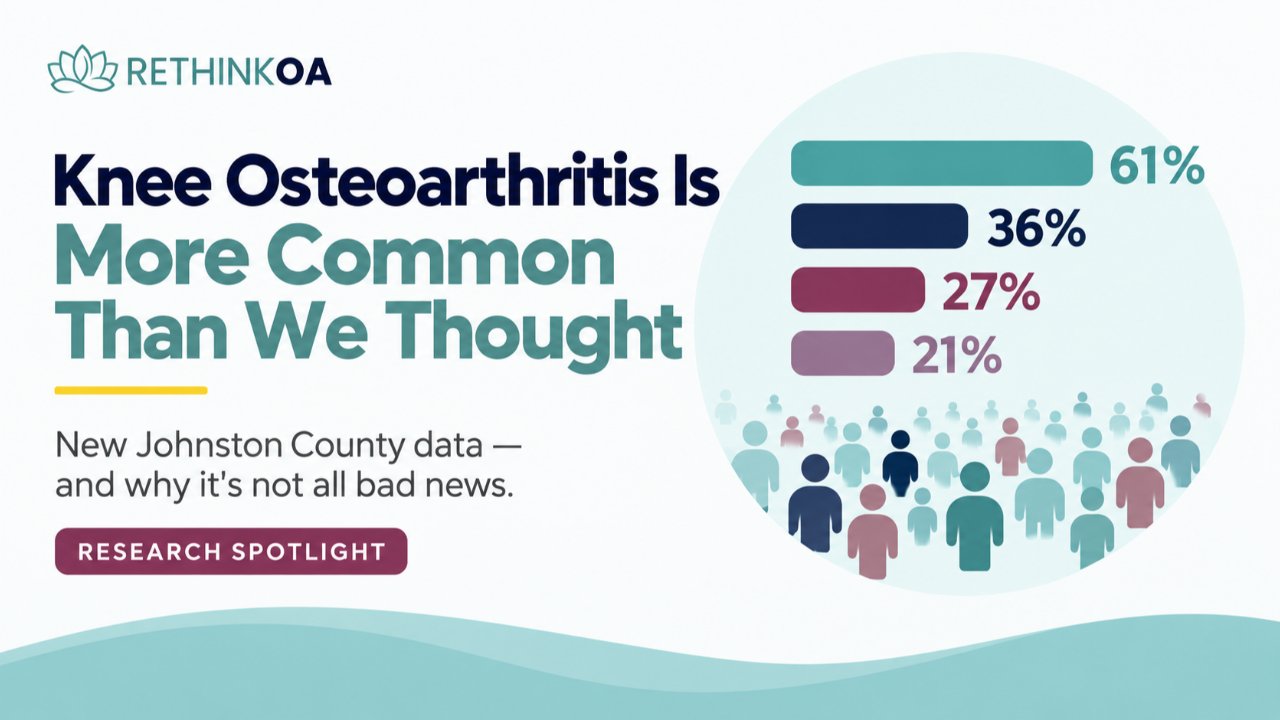
Today is World Arthritis Day, and I want to mark it with a study that made me sit up. For decades, our best estimates of how many people have knee osteoarthritis came from a landmark long-running study in Johnston County, North Carolina. Now that same research group has enrolled a brand-new cohort—and the numbers came back higher than before. Noticeably higher.
That could sound like bad news. But when I read the details, I saw something more useful hidden inside the prevalence figures: fresh evidence that pain and joint pictures don’t match, and a clearer view of which factors matter most. This month’s research spotlight is about what the new Johnston County numbers actually say—and why, if you have knee pain, they may be more reassuring than alarming.
The Study: A New Look at a Famous Population
The Johnston County Health Study (Patel and colleagues, Osteoarthritis and Cartilage) enrolled 902 adults between 2019 and 2024—average age about 55—and collected symptoms, X-rays, and ultrasound scans of the knee. Because the group was recruited to represent the community, the researchers could estimate how common each finding is in the general adult population, and compare across sex and body-mass groups.
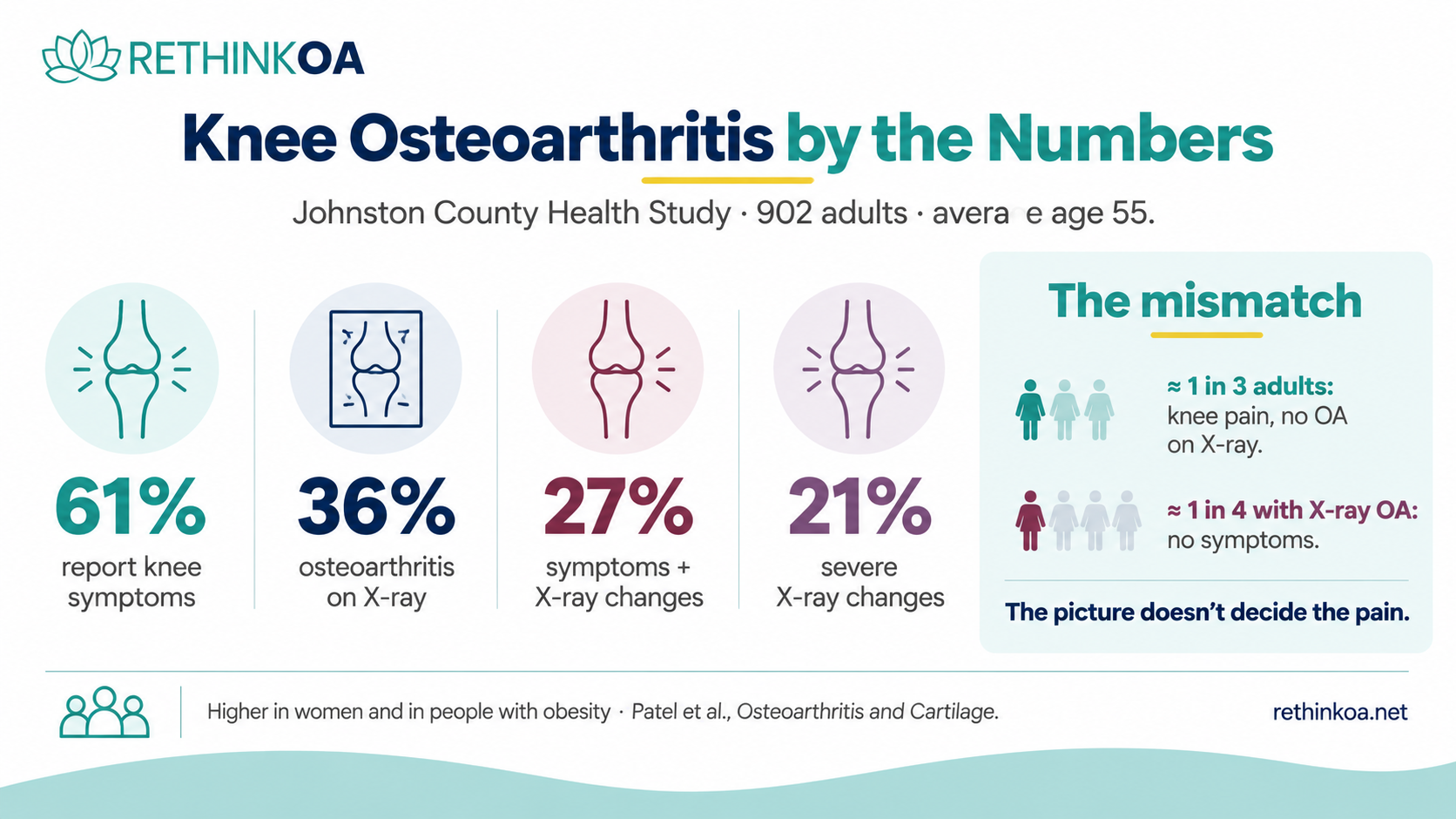
Here’s what they found, as population-weighted estimates:
- 61% reported knee symptoms
- 36% had osteoarthritis visible on X-ray (“radiographic” OA)
- 27% had symptomatic OA—X-ray changes plus symptoms
- 21% had severe radiographic OA
Every one of those figures was higher than estimates from the original Johnston County Osteoarthritis Project and other earlier cohorts. Knee osteoarthritis, in other words, is even more common than we thought—and it’s showing up in a relatively young group.
Read the Numbers Again: The Picture and the Pain Don’t Match
Set those four figures side by side and something important falls out. If 61% of people have knee symptoms but only 27% have symptoms and X-ray changes, then roughly a third of the whole population—more than half of everyone with knee pain—has symptoms with no osteoarthritis on their X-ray at all. And if 36% have X-ray changes but only 27% have symptoms alongside them, then about one in four people with visible knee osteoarthritis has no knee symptoms.
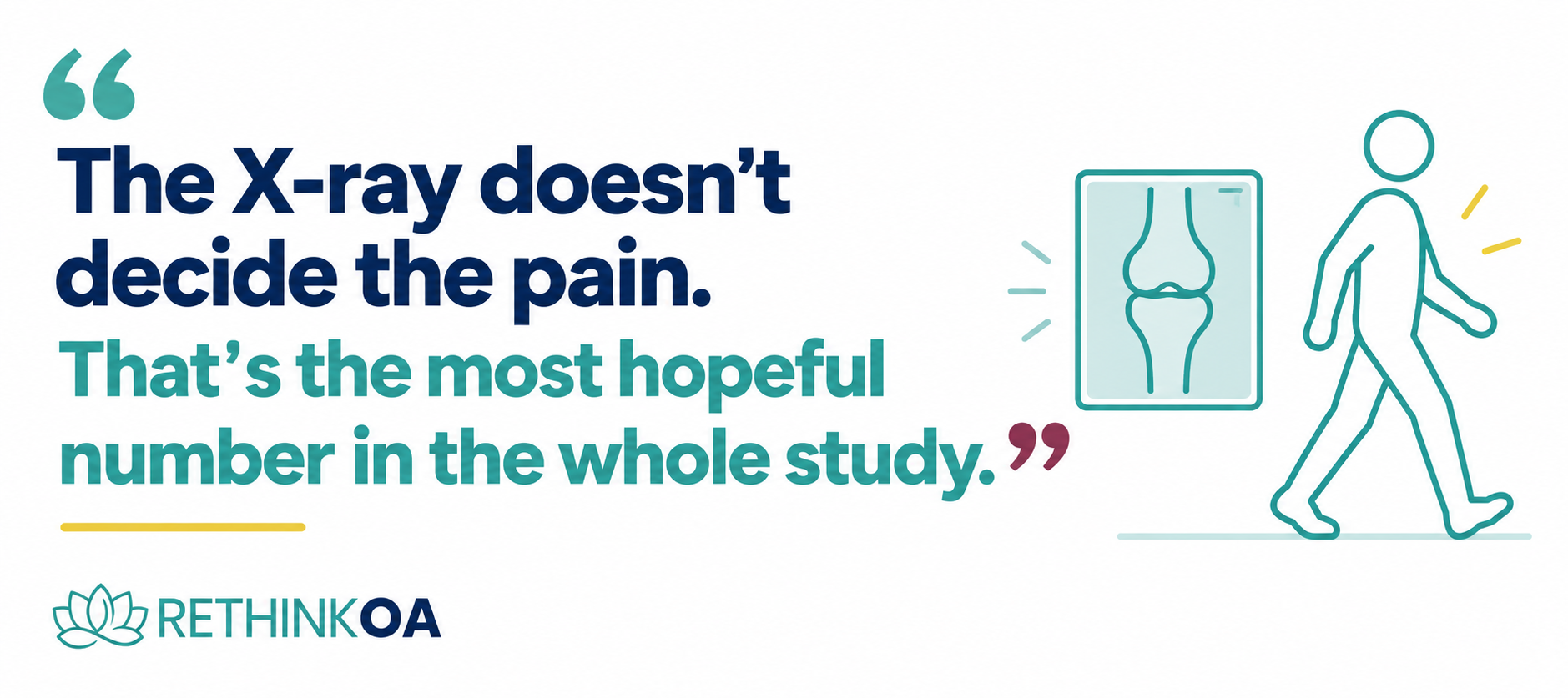
This is the imaging–pain mismatch we’ve written about before, now confirmed in a fresh community sample: the X-ray does not decide the pain. Some people carry significant joint changes comfortably; many people hurt with pristine-looking joints. Pain is produced by a nervous system weighing many inputs—joint signals, yes, but also strength, sleep, stress, and beliefs about what’s happening inside. That’s why, as we explored in our chronic pain post, so much of pain is changeable even when the picture isn’t.
Who Was Most Affected—and Why It Points to Levers
Symptoms, radiographic OA, symptomatic OA, and severe OA were all more common in women and in people with obesity; among women, those with severe obesity had the highest rates of moderate and severe X-ray changes. The authors concluded that distinguishing by sex and obesity level may improve understanding of knee OA and help tailor prevention and treatment.
Two thoughts on that. First, the sex difference fits a growing body of work on how estrogen decline around menopause affects joint tissues—more reason women’s midlife knee pain deserves to be taken seriously rather than dismissed. Second, the body-weight link is real but often misunderstood as purely mechanical. Excess weight does increase load (roughly four pounds of knee force per pound of body weight), but fat tissue is also metabolically active, releasing inflammatory signals—which is why obesity is linked to arthritis in the hands, too. That’s not a verdict; it’s a lever. Modest weight change, better sleep, and regular movement all influence inflammation, not just load.
Why “More Common” Is Not All Bad News
First, you are not alone—not remotely. If nearly two in three adults in a community have knee symptoms and one in three has visible osteoarthritis, this is one of the most ordinary human experiences there is. Ordinary doesn’t mean trivial, but it does mean it’s well studied: the first-line treatments—exercise, education, and weight management where relevant—have decades of evidence behind them.
Second, the mismatch is the hopeful part. If a third of the population has knee pain without X-ray osteoarthritis, and a quarter of those with X-ray osteoarthritis have no pain, then the thing most people fear—the picture—is not what determines how you live. Your strength, your sleep, your confidence, and how you understand your pain all get a vote. In our own clinical trial, changing how people understood their osteoarthritis increased activity and reduced fear—without touching a single joint.
Final Thoughts
On World Arthritis Day, the headline is that knee osteoarthritis is more common than we thought. The story underneath is better: pain and pictures diverge in both directions, the biggest risk factors point to real levers, and the treatments that work are the ones most people can start this week. If you’ve been feeling like your knee makes you an outlier, this study says the opposite. You’re in very large company—and the path forward is well lit.
If understanding your pain is where you’d like to start, that’s the first module of Rethink OA.
FAQ
How common is knee osteoarthritis?
Very. In the new Johnston County Health Study (902 adults, average age ~55), an estimated 61% reported knee symptoms, 36% had osteoarthritis on X-ray, 27% had symptomatic osteoarthritis (X-ray changes plus symptoms), and 21% had severe X-ray changes—all higher than earlier estimates. Prevalence was higher in women and in people with obesity.
Can you have knee pain without arthritis on an X-ray?
Yes—commonly. In this study, 61% had knee symptoms but only 27% had symptoms together with X-ray osteoarthritis, meaning roughly a third of adults had knee symptoms with no radiographic osteoarthritis. Pain is influenced by many factors beyond joint structure, including muscle strength, sleep, stress, and nervous-system sensitivity.
Can you have osteoarthritis on an X-ray without pain?
Yes. About 36% had radiographic osteoarthritis but only 27% had symptoms alongside it—so roughly one in four people with visible knee osteoarthritis reported no symptoms. This is one reason X-ray severity is a poor predictor of pain or function.
Why is knee osteoarthritis more common in women?
The reasons are still being studied, but research points to several contributors, including hormonal changes around menopause (estrogen receptors are present throughout joint tissue), differences in joint anatomy and muscle strength, and higher rates of obesity in some populations. Distinguishing by sex may help tailor prevention and treatment.
Does being overweight cause knee osteoarthritis?
Excess weight is a well-established risk factor through two routes: increased load (roughly four pounds of knee force per pound of body weight) and inflammatory signals released by fat tissue. It’s a contributor, not the whole story—and it’s one of the more modifiable ones. Research suggests even modest weight loss, combined with movement, is associated with meaningful symptom improvement.
About the Author
Melissa Boswell, PhD, is a bioengineer and digital health founder with nearly a decade of experience working in osteoarthritis, movement science, and human performance. She is the founder of Rethink OA, a clinically validated digital program developed from research conducted with collaborators at Stanford University and published in npj Digital Medicine. Her work focuses on helping people better understand pain, movement, and behavior change in osteoarthritis.

References
- Patel M, et al. Prevalence of Knee Radiographic, Symptomatic Osteoarthritis and Ultrasound Features Across Sex and Body Mass Index Groups: The Johnston County Health Study. Osteoarthritis and Cartilage. 2026. Abstract: ACR Meeting Abstracts
- Callahan LF, et al. The Prevalence of Knee Symptoms, Radiographic, and Symptomatic Osteoarthritis at Four Time Points: The Johnston County Osteoarthritis Project, 1999-2018. ACR Open Rheumatol. 2021. https://pmc.ncbi.nlm.nih.gov/articles/PMC8363850/
- Wright VJ, et al. The musculoskeletal syndrome of menopause. Climacteric. 2024. https://doi.org/10.1080/13697137.2024.2380363
- Arthritis Foundation. How Fat Affects Osteoarthritis. https://www.arthritis.org/health-wellness/about-arthritis/related-conditions/other-diseases/how-fat-affects-osteoarthritis
- World Health Organization. Osteoarthritis fact sheet. https://www.who.int/news-room/fact-sheets/detail/osteoarthritis
- Boswell MA, et al. A randomized clinical trial testing digital mindset intervention for knee osteoarthritis pain and activity improvement. npj Digital Medicine. 2024. https://www.nature.com/articles/s41746-024-01281-8
Move More. Fear Pain Less.
Learn how to reduce pain, stay active, and support your joints—starting today.